

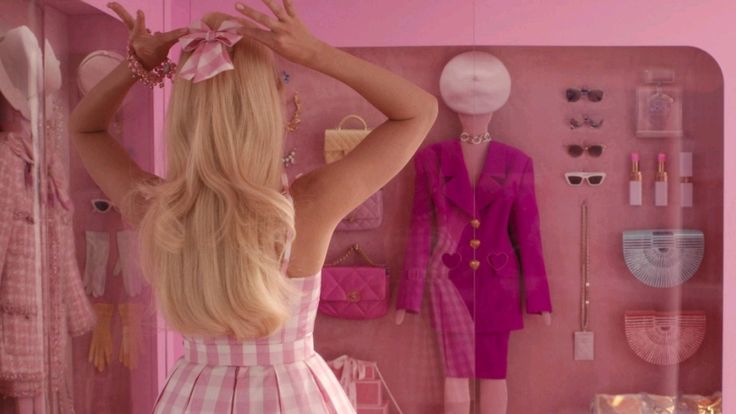
When Barbie (2023) was released, it reignited a debate on feminism, identity, and the commodification of empowerment. Directed by Greta Gerwig, it showed the mood of the particular period, raking in more than a billion dollars and leading to everything from think pieces to Halloween costumes. But while some fans took it as a bold feminist satire, others saw irony wrapped in corporate glaze.
At its core, Barbie tries to unravel what happens when an icon of perfection is forced to face reality. In Barbieland, everything is pastel-colored and matriarchal, until Barbie begins to get anxious, acquire cellulite, and think about dying. This starts a journey into the “real world,” where she conflicts with patriarchy, capitalism, and human complexity. The film depends on surrealism and humor to challenge the norms of society laid upon women. Still, it also raises a skeptical question: Can something created to sell perfection truly be reimagined to deconstruct it?
This movie satirizes gender norms, from toxic masculinity to the impossible standards of femininity. But this meta approach walks a fine line. The movie critiques the system but plays by its rules, ironically marketing a feminist message through the very doll that it seeks to subvert.
Some argue it offers a tasty feminism, such as safe, cute, and easy to believe in without ever having to change too much. Its box office success rested on brand nostalgia, not revolution. Others assert that the film meets people where they’re at and uses Barbie’s global popularity as a Trojan horse for deeper-seated ideas about gender roles, emotional labor, and self-actualization.
One of the film’s most powerful scenes is given by Gloria (played by America Ferrera), whose speech immediately went viral. It struck a chord especially with young people, about the impossibility of ever being “enough” in an eternally revolving universe of expectations. And for some, even this was too slicked over, a feminism filtered through a marketing machine.
However, Barbie does one thing irrefutably well: it sparks dialogue about mothers and daughters, men and vulnerability, perfection and purpose. It reimagines Barbie not as a model of flawlessness but rather as one trying to make meaning. That is a monumental shift for a character that has been conventionally criticized for representing unattainable notions of beauty.
Is Barbie feminist, then? The answer may depend on what we define as feminism. Whether or not we believe that media created within corporate structures can still break new ground, and not just trivial ground, at that. One thing is certain: Barbie paves the way for more sophisticated, imperfect, and playful femininity on screen.












Leave a Reply