

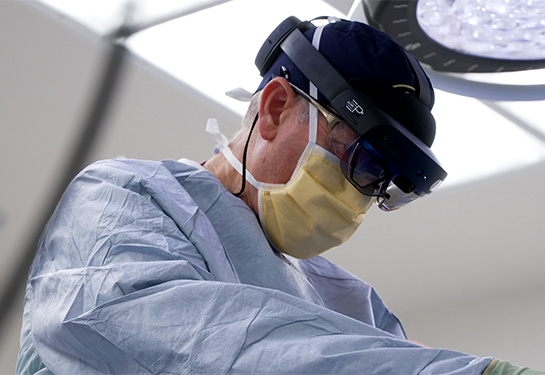
In recent years, augmented reality (AR) glasses have started to reshape how surgeries are performed. By overlaying digital images, data, and guides directly onto a surgeon’s real-world view, these devices bridge the gap between medical imaging and hands-on procedures. The result is greater precision, faster decision-making, and improved patient safety.
Enhancing Surgical Vision
One of the greatest challenges in surgery is translating preoperative scans—like MRI or CT images—into the actual anatomy seen on the operating table. Traditionally, surgeons glance back and forth between monitors and the patient, mentally mapping the two. AR glasses remove this disconnect by projecting those scans directly onto the patient in real time.
In orthopedic surgery, for example, AR can highlight exactly where to insert screws or align implants. In neurosurgery, it can trace delicate blood vessels or show tumor boundaries, reducing the risk of accidental damage. This “X-ray vision” not only improves accuracy but can also make complex procedures safer and more efficient.
Hands-Free Data Access
Operating rooms are high-pressure environments where every second counts, and sterility is critical. AR glasses allow surgeons to view essential information—such as patient vitals, checklists, or step-by-step procedural guides—without breaking concentration or touching equipment. Instead of turning to wall-mounted monitors, the surgeon can keep their eyes on the surgical site while accessing all the data they need.
This capability becomes even more powerful when paired with remote collaboration. A specialist across the world can see exactly what the operating surgeon sees, offering real-time guidance as if they were in the room. This opens the door for expert support in rural hospitals, military field operations, or during complex, rare procedures.
Transforming Surgical Training
Beyond active surgeries, AR glasses are also revolutionizing how surgeons learn. Trainees can practice procedures on cadavers or synthetic models with virtual overlays showing anatomy, tool positioning, and surgical steps. Mistakes can be instantly identified and corrected without risk to real patients. This immersive, visual learning can accelerate skill development and improve confidence before entering a live operating room.
Looking Ahead
While AR glasses in surgery still face challenges—such as high costs, system integration issues, and the need for user training—advancements in display clarity, processing power, and artificial intelligence are rapidly addressing these barriers. In the near future, AR systems could automatically identify surgical landmarks, highlight problem areas, and even suggest the optimal next step.
If adoption continues at its current pace, AR glasses may soon become as common in operating rooms as surgical masks—offering a new era of precision and safety in healthcare.









Leave a Reply