

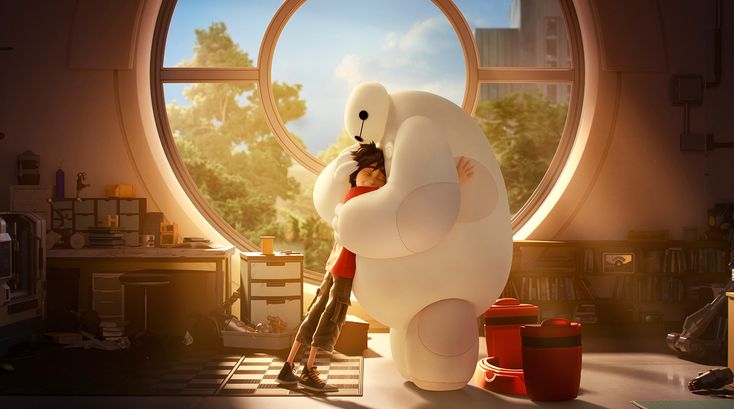
In a world of high-flying action, robotic sidekicks, and neon-lit cities, Big Hero 6 could’ve easily been just another flashy animated superhero film. But beneath the armor and machines, it tells a deeper story—one about loss, grief, and what it really means to heal. While it’s packed with science fiction and humor, the emotional core of the movie rests on something all too human: a teenager learning to live without his brother.
We meet Hiro Hamada, the 14-year-old protagonist, as a veritable prodigy who is a very gifted roboticist with little interest in school — or making social connections. His only firm anchor in life is his older brother Tadashi who provides just enough support to guide Hiro into a better direction. When Tadashi dies unexpectedly in a fire, rather than continuing along a fun tech-adventure, the film gets grounded. In that moment, Big Hero 6 becomes one of the most realistic representations of teenage grief found in a mainstream animated film.
Hiro’s journey into grief does not follow a neat, Hollywood-type arc; rather, it is what psychologists and counselors describe as a typical reaction to a traumatic loss, particularly in young people. After his brother Tadashi’s death, Hiro almost completely shuts down. He lies in bed, silent, still, and unresponsive for days. He ignores his food, ignores calls, and any motivation to do anything is entirely absent. This is similar to the emotional numbness and paralysis many experience at the beginning of grief. Mental health professionals describe this stage of grief as one in which the brain is protecting itself from our emotional responses by shutting them down temporarily.
As the narrative unfolds, Hiro’s behavior begins to change. When he puts together a potential clue as to what happened to his brother, he suddenly transforms his grief into rage. He reprograms Baymax (a healthcare provider robot designed by his brother) into a weapon and takes out Baymax’s healthcare chip; he is taking compassion and turning it into destruction. This is an example of displaced grief; where anger shrouds deeper feelings of sorrow, guilt, and helplessness. Hiro is not only attempting to fight a villain; he is trying to regain some control over something he never fully processed.
The turn to violence and reckless behavior described above represents how teens often behave when faced with grief. Mental health professionals describe how an adolescent may display behavior through risk-taking, aggression and shutting down emotionally. Often this is because adolescents have not developed the skills that help to navigate intense emotions. Hiro isolates and lashes out, he avoids support; these behaviors are not exaggerated, they are simply displayed as raw and real, which provides a powerful contribution to the characters overall effectiveness.
Then comes Baymax – Tadashi’s robot legacy and, ironically, the most emotionally intelligent character in the film. Baymax does not offer empty comfort. He listens, observes, and patiently says to Hiro: “On a scale of one to ten how would you rate your pain”. This is a gentle question and represents segments of therapies affectionately known in mental health practice both in physical health framed experiences. Baymax becomes the bridge from Hiro’s isolation and isolation slowly leads Hiro to reconnect.
What makes this representation remarkable is that it avoids rushing Hiro’s healing. Hiro doesn’t have an easy “fix it” moment. It happens not when he reaches a point of being able to defeat a villain or when he wins a fight but when he watches the recording of Tadashi creating Baymax. He remembers the love, not just the loss. This can have the therapeutic effect of reminiscence therapy, which is a mode often used in the real world to create emotional release by remembering the positive experiences of a loved one. It is nuanced and powerful, and it signifies the start of Hiro’s acceptance.
At the end of Big Hero 6, Hiro has not “gotten over” the death of Tadashi. That is not the message presented in the film. Hiro has learned how to carry that experience and has learned how to continue moving ahead while still honoring the legacy of his brother. He starts to reconnect with his friends, he finds his way back to a feeling of invention, and more than anything, he begins to allow people in again. He does not have the emotional pain erased; it becomes integrated into who he is.
In a genre of filmmaking that often leans on loss as a way to quickly establish plot, or as a dramatic way to present a character’s motivation, Big Hero 6 takes its time in weaving its way through grief. It does not sanitize it, or try to over explain the experience of grief; instead it just shows that healing is not linear, and that grief also can take the form of silence, anger, disconnect, and eventually reconnecting. It also reminds viewers, especially the younger ones, that it is ok to be broken, to reach out for help, and that things take time. At its core, Big Hero 6 isn’t just about heroes or robots—it’s about what happens when we lose the people we love, and how we slowly, painfully, and honestly find our way forward.









Leave a Reply