

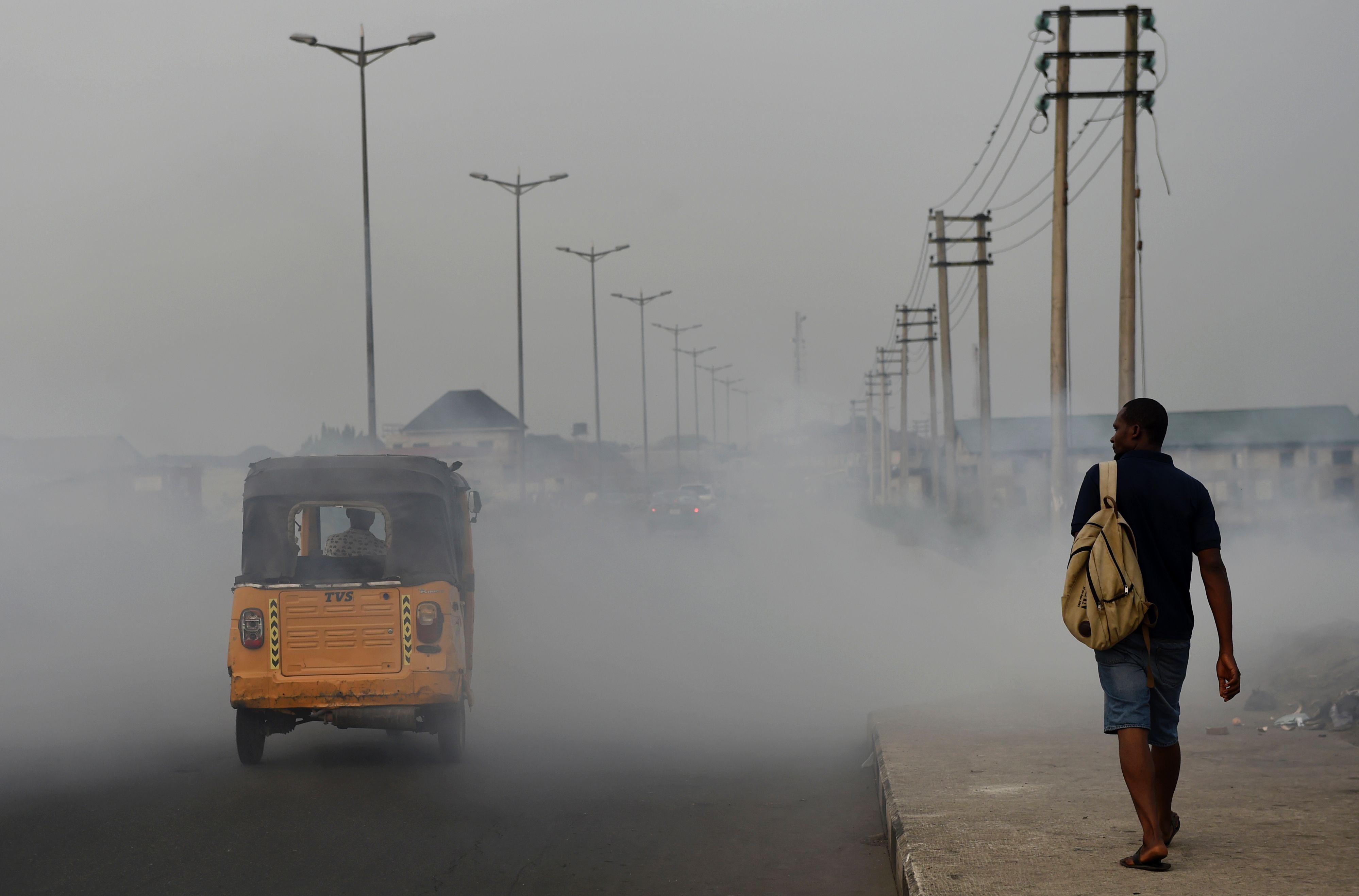
Data derived from the World Health Organization (WHO) relays that almost the entirety of the global population–an alarming 99%–breathe in air which exceeds the WHO guideline limits. The air that is breathed in by the aforementioned populous contains high levels of pollutants which negatively affect both the bodies and minds of individuals. In addition, according to data from WHO, roughly 2.6 billion people are exposed to hazardous levels of air pollution each day.
What Are the Primary Sources of Air Pollution?
Air pollution is an amalgamation of toxic substances from both man-made and natural sources. Sources of man-made air pollution include but are not limited to the following: vehicle emissions, fumes from chemical production, byproducts of manufacturing and power generation, fuel oils, and natural gases. While sources of natural air pollution include but are not limited to the following: smoke from wildfires, gases and ash from volcanic eruptions, and methane which is produced as a byproduct of decomposing organic material in soil.
What Are the Primary Pollutants Involved in Air Pollution?
Poor air quality is comprised of numerous components, with the proponents being the following:
- Particulate matter refers to a combination of solid and liquid droplets, with larger particles (PM10) arising from pollen, sea spray, and wind-blown dust from erosion, agricultural spaces, roadways, and mining operations, while finer particles (PM2.5) can be derived from primary sources such as combustion of fuels in power generation facilities, industries, or vehicles, and secondary sources, namely chemical reactions between gases.
- Nitrogen dioxide is a gas produced as a result of the combustion of fuels in processes such as transportation, industry, power generation, furnaces, and gas stoves.
- Sulfur dioxide is a gas produced mainly from the combustion of fossil fuels for industries, power generation, and domestic heating.
- Ozone at ground level, caused by a chemical reaction of gases, such as nitrogen dioxide, in the presence of sunlight. Particulate matter, the pollutant that is most commonly monitored by regulatory frameworks and for which a lot of evidence of adverse health impact is available, is followed by nitrogen dioxide.
Which Regions Contain the Highest Concentrations of Air Pollution Worldwide?
As of 2025, the following regions contain the highest concentrations of air pollution worldwide:
- Lahore, Pakistan
- Hotan, China
- Bhiwadi, India
- Delhi (NCT), India
- Peshawar, Pakistan
- Darbhanga, India
- Asopur, India
- N’Djamena, Chad
- New Delhi, India
- Patna, India
A common trend seen among these regions regarding poor air quality is the prevalence of Southeast Asian countries such as India and Pakistan. These exacerbated levels of air pollution can be attributed to these regions’ populations, with India housing a population of roughly 1.4 billion as of 2025, the largest on the globe.
What Are the Health Impacts of Air Pollution?
Particles with a diameter of 10 microns or less (≤ PM10) can penetrate and lodge deep inside the lungs, causing irritation, inflammation, and damaging the lining of the respiratory tract. Smaller, more health-damaging particles with a diameter of 2.5 micrometers or less (≤ PM2.5 – 60 of them make up the width of a human hair) can penetrate the lung barrier and enter the blood system, affecting all major organs of the body. These pollutants increase the risk of heart and respiratory diseases, as well as strokes and lung cancer.
Ozone is a major factor in both causing asthma and exacerbating it, and nitrogen dioxide as well as sulfur dioxide may also cause bronchial symptoms such as asthma, lung inflammation, and reduced lung function.
Air pollution has a disastrous effect on children, with more than 5 million deaths of children under the age of 5 years. Of these, over 27% (1.7 million) were attributed to environmental factors, with air pollution being the leading cause. Globally, lower respiratory infections rank as the second leading cause of death for children under 5 years. Each year, 442,000 children (as of 2022) under the age of 5 die prematurely due to breathing polluted air. Evidence suggests that air pollution can also affect children before birth, leading to reduced birth weight through their mothers’ exposure. Additionally, emerging evidence links air pollution exposure to cancer, neurodevelopmental, and metabolic diseases in children










Leave a Reply