

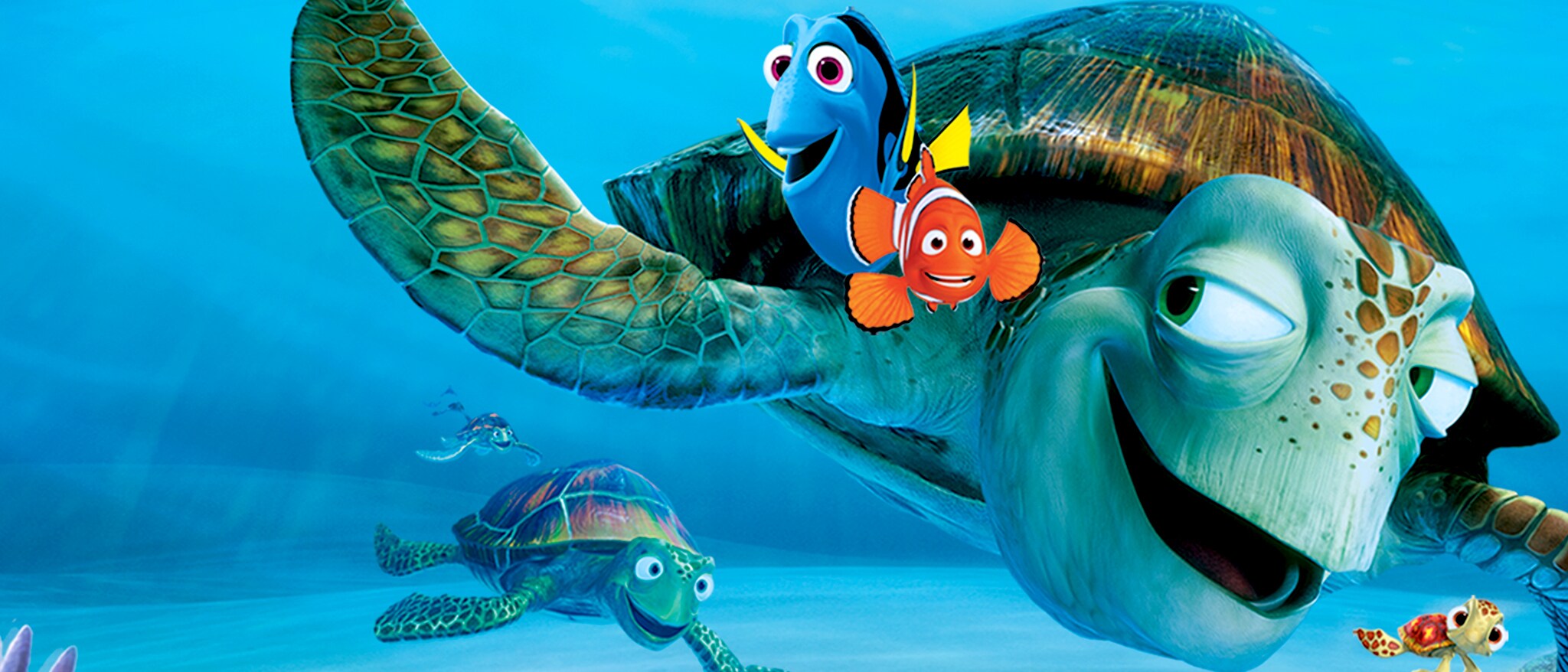
Inarguably one of the most successful blockbuster movies of 2003, Disney Pixar’s Finding Nemo dominated the box office and swept a majority of the awards presented during the 2004 awards season. What is most often overlooked, however, is the film’s noteworthy portrayal of a disability; the extent to which numerous children’s movies to this day are unable to replicate. The protagonist and titular character of the film, a clownfish by the name of Nemo, endures the struggles that are associated with his “lucky fin,” a physical deformity due to his right fin being smaller than his left; the impairment has a human equivalent by the name of congenital limb difference: a birth defect that causes an arm or leg to be missing, deformed, or undersized. The result of a mortal attack on his mother and siblings, Nemo’s situation was deliberately chosen as one of the main complications that the characters must overcome—a decision that must not be taken lightly considering entertainment companies’ notorious history of overlooking issues that minorities suffer from.
Finding Nemo not only presented an important portrayal of disabilities but also further delved into the concept that assumptions of the disabled community and demographic, as opposed to physical limitations, pose more formidable challenges. Nemo was consistently put into a position where he had to deny the idea that his “lucky fin” rendered him less capable than others, specifically in opposition to his overly cautious and solicitous father, Marlin. Marlin’s fears, a sentiment shared amongst many parental figures within the disabled community, lead him to limit Nemo’s independence; oftentimes he went to extreme lengths to keep him [Nemo] shielded from any potential danger. Frustrated, in an act of rebellion, Nemo swims out to the ‘drop-off’, the section where the reef ends and open water begins, where he gets captured, setting the premise for the rest of the movie. His quest, however, demonstrates that his fin does not make him incapable, and his journey does not portray limb difference as a fault—rather, it is viewed simply as a part of who he is and can even serve as a source of power. Near the end, Nemo uses his small fin to swim through tight spaces and executes a plan to save a school of fish, ultimately suggesting that individuals with disabilities can not only overcome their own challenges but also can actively assist others.
A key factor in why the movie resonated with audiences was its ability to give children with disabilities meaningful and relevant representation. Studies show that positive disability depiction in children’s media can boost self-esteem and reduce feelings of isolation. For children, especially those with congenital limb differences who rarely encounter characters who reflect their experiences in mainstream media, seeing a hero like Nemo succeed in his story reinforced their belief that their differences do not define them. For many viewers, watching Nemo defy expectations wasn’t simply well-needed representation—it was an assertion that they, too, can achieve the extraordinary.















Leave a Reply