

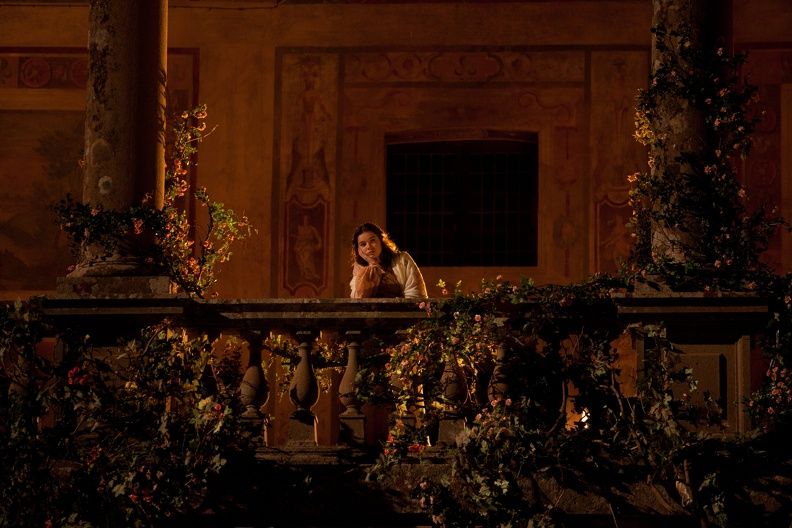
Romeo and Juliet is one of the most famous love stories of all time. It is a tragedy written by William Shakespeare about 2 young lovers who engage in a short love affair that culminates in marriage and ends in tragedy. This play portrays impulsivity by showing us both Romeo’s and Juliet’s rash life choices that result in their deaths. Those decisions include Romeo killing Tybalt and Paris, their fast-paced love affair and their suicides. This play also portrays the concept of love at first sight with Romeo falling in love with Juliet after he first saw her at the masquerade ball.
Despite the dramatic nature of the play, love at first sight does happen and teenagers are prone to impulsiveness. Love at first sight is a phenomenon where the second you see a person you feel an instant connection to them. These feelings are usually without reasoning behind them. In Romeo and Juliet this is portrayed beautifully with Romeo forgetting all about his previous crush Rosaline the second he sees Juliet. Keep in mind that he knows almost nothing about Juliet at this moment which is also an element of love at first sight. Love at First Sight does not always guarantee a relationship, and Romeo and Juliet is an example of a story that shows love at first sight blossoming into a relationship. In reality love at first sight does not always guarantee a long term relationship. According to psychologist Susan Albers who “proposes all relationships are fundamentally based on varying amounts of three key components: intimacy, passion and commitment. “Love at first sight is the passion part of that triangle, but to have real, romantic love, you need to have all three of those components, … Distinguishing love at first sight from actual love takes some reflection and time to think and piece apart if it’s going to be a lasting relationship or a fleeting attraction. At the heart of it, love may not be the right term, but it is infatuation.””. However, In Romeo and Juliet we are not privy to whether their relationship could have been long-term without the interference of their feuding families and Romeo’s mistakes. Whether Romeo and Juliet shared love or mere infatuation is fiercely debated among readers years after its publication and saying one or the other depends on your subjective interpretation of the play. Therefore, I shall not go into it in this article.
Teenage impulsivity is seen in multiple instances in this play as I said earlier. Even though teenagers are impulsive and engage in risk-taking behavior the truth is not that simple. According to binge-drinking data from the Seattle Social Development Project, around 70% of the youth in the surveyed group exhibited no binge-drinking; 3% of youth exhibited high binge-drinking at a young age until age 18; 4% of youth began engaging in binge-drinking around the ages of 15-16; Lastly, 23% would only start engaging in binge-drinking at the age of 18. A significant portion of the participants in this project either did not engage in the risk-taking behavior, which in this case was binge-drinking, or did not engage in it until after the age of 18. Only small proportions of the participants (3% and 4%) really engaged in binge-drinking as a minor. This shows that all adolescents do not engage in risk-taking behavior across the board. However this does show that risky behavior usually stems from the early years before the ages of 15-16, especially when you consider that 4% of youth in another study also showed high rates of aggressive behavior starting in early childhood. What this means is that at least Romeo should have had a consistent pattern of impulsive behavior originating from childhood, before the play started. Judging by the fact that Romeo’s friends, Benvolio and Mercutio, are not at all surprised by Romeo’s antics and nature of being ruled by his emotions we can assume that he has been impulsive since before the play, which would be accurate according to the data from the studies.
In conclusion, The play Romeo and Juliet offers an accurate portrayal of teenage impulsivity. Its portrayal of love is easily debatable, and it is not easy to fact-check in an objective way. To those of you who read this far, I assume at least some of you persisted this long due to expecting me to write that Romeo and Juliet did not depict something correctly or commenting upon the “toxic” love and its impact on society. In all honesty, If I wasn’t the writer I would be also reading this article solely for that. However, Sometimes these kinds of anticlimactic endings come out of fact-checking and you cannot help it. I am not a fan of Romeo and Juliet either but we cannot force things to be an outcome we want. Sometimes the truth is not interesting but that does not mean it should not be told. I hope you have enjoyed this article and thank you for reading.













Leave a Reply