

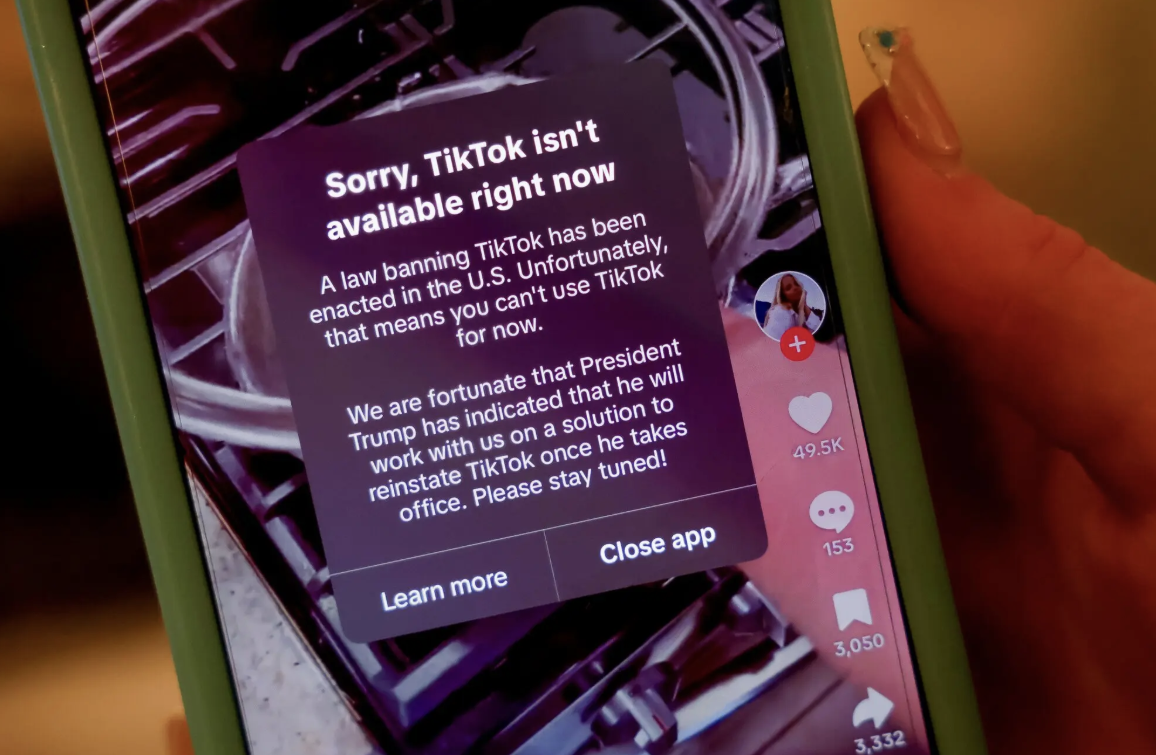
The past weeks, for the 170 million Americans that use the popular social platform “TikTok”, have been filled with sadness and preparation for a new era of short-form content sites. Ever since the ban was signed in April of 2024 by Joe Biden, many users have been concerned with what the future held, with many having long-term carriers on the app.
Nonetheless, today, January 19th, TikTok released a public statement explaining that they are in the process of restoring their services thanks to the support of the returning President, Donald Trump. TikTok goes on to explain that, “It’s a strong stand for the First Amendment and against arbitrary censorship”.
Some users felt this ban grappled with the line of censorship protected by the First Amendment in the United States Constitution. However, displayed through the Supreme Court’s unanimous decision to ban the app, some officials have concerns with the platform’s ability to collect vast amounts of information from American users.
On the other hand, some healthcare professionals have been applauding the ban, furthering that this app can do more than collect personal data. Many experts have raised issues about the social media addiction plaguing citizens, especially teenagers and young adults. “The doom scroll” relates to compulsively consuming content online, even when it’s upsetting. Oftentimes, this can take hours of a user’s day, and prevents them from leaving their house, stepping outside, and eating nutritious food.
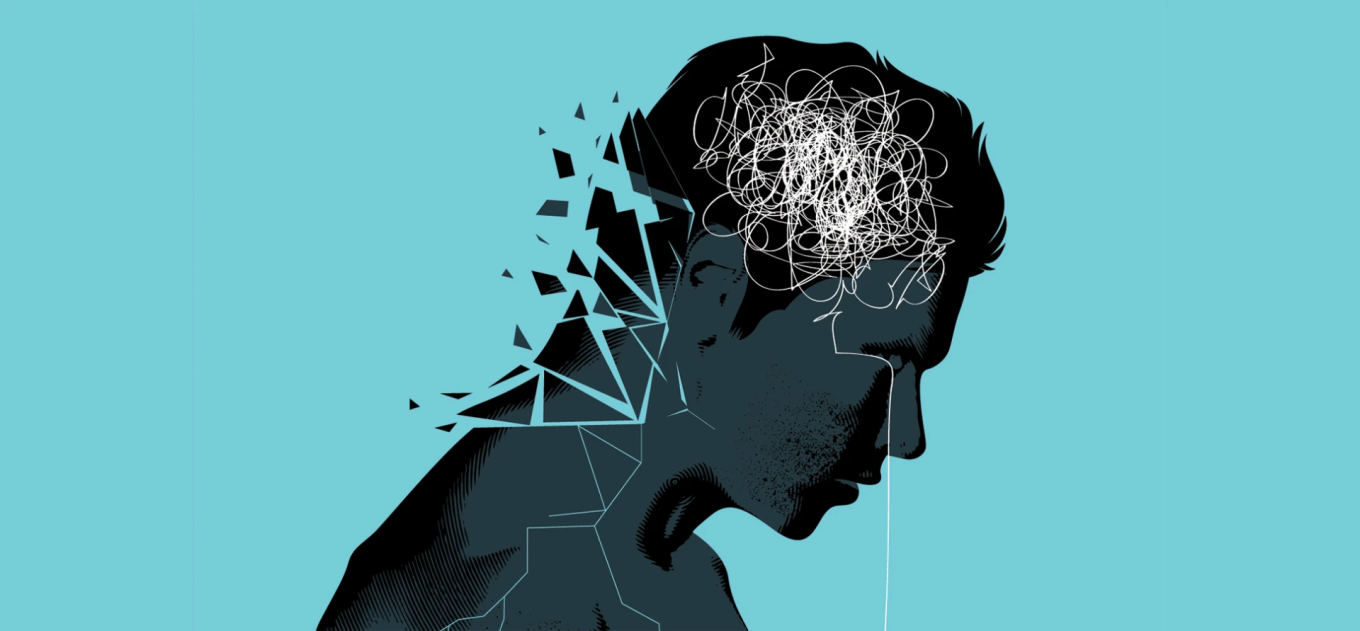
Mental health remains a major concern with short-form content sites such as TikTok. Its advanced algorithmic intelligence often pushes violent and invasive media that have been found to increase feelings of depression and anxiety. One study conducted by Amnesty International found that within the first 20 minutes of usage on TikTok, the majority of the videos on the “For You” page were related to mental health struggles with some romanticizing suicide.
The platform is addictive by design. The more shocking or even disturbing content it pushes, the further it drives a user down its dark and depressive “rabbit hole”.
Other studies have found that TikTok’s focus on promoting short and engaging content, with the ability to swipe at a moment’s notice, decreases attention span and leads to worsened reading comprehension and speed for younger children. In fact, 50% of users find that longer videos are “stressful” to watch, furthering the tight grip short-form content has on their users. Studies have found that the optimal length to keep the viewer engaged is between 21 to 34 seconds.
Ultimately, despite the relief of more than half of America’s population, the reinstating of TikTok should be approached with caution as it and other social networking sites continue to slowly deteriorate the health of younger generations.













Leave a Reply