

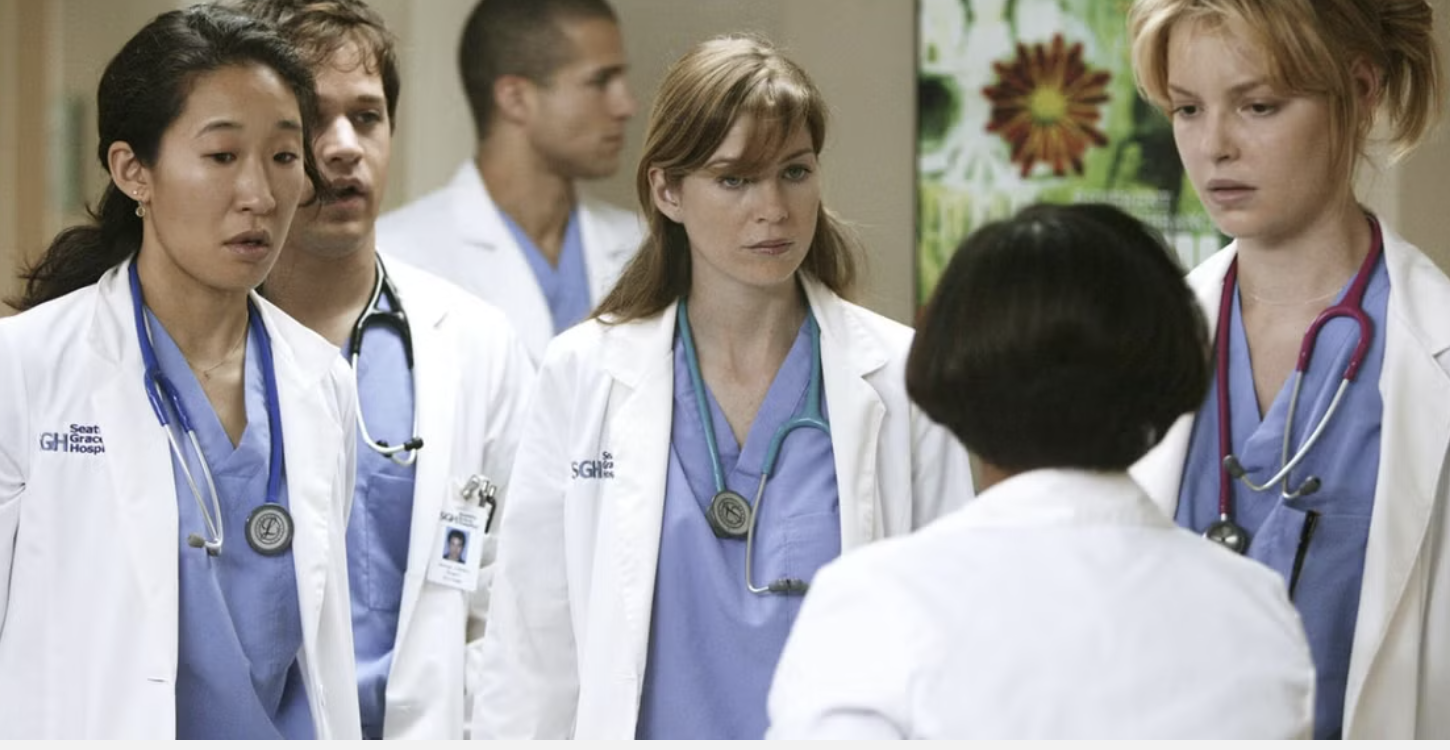
Releasing episodes for over 20 years, Grey’s Anatomy, a medical drama series, has been highly acclaimed by critics and audiences for its interest in the lives of surgical interns. But as entertaining as the series may be, how accurate is it in depicting real-life medicine?
Some of the most noteworthy scenes in Grey’s Anatomy are of the surgical procedures shown throughout the series. The rare medical conditions, emergency room chaos and trauma, and the complex operations, while many of these procedures show accuracy to real-life counterparts, many dramatized liberties are taken for the entertainment purposes of the show.
The show accurately portrays certain surgical procedures throughout. One specific example is in Season 6 when Dr. Miranda Bailey performed the Whipple Procedure with a level of accuracy confirmed by many real-life doctors. Additionally, the show represents the amount of effort and time it takes for procedures, especially those involving removing and connecting internal organs.
While its medical accuracy is relatively high, especially for a show, with the sheer length of the series, a few leaks of detail show. One significant example of this is the representation of CPR, where patients are often seen being revived or brought back to good condition in a matter of seconds. In reality, CPR takes a harsh physical toll on the individual completing it, being quite tiring and having a much lower success rate than what is shown in the show. For those who do survive the procedure, there is a risk involved, prioritizing effective chest compressions for the hope of survival rather than a few broken ribs, along with long-term complications due to the lack of oxygen for an extended period.
Although the interns’ training and learning are of high importance, the well-being of patients always comes first. During the series, interns are often seen performing high-risk surgeries under minimal supervision, which wouldn’t occur in real hospitals, where residents undergo numerous years of training before being given the opportunity to perform these complex operations.
Clearly, for the entertainment and drama aspect of the show, the level of social dynamics presented is far greater than what would be seen in an actual hospital setting. The workload for physicians is immense and wouldn’t leave time for the romantic moments, personal conflicts, and ethical dilemmas that are present throughout.
The purpose of the show, at its core, is in fact a show, a television drama designed to entertain and not to educate. Fulfilling its purpose in entertainment, it is also enjoyable to see a deep thought of accuracy and detail taken in the making of the show.















Leave a Reply