

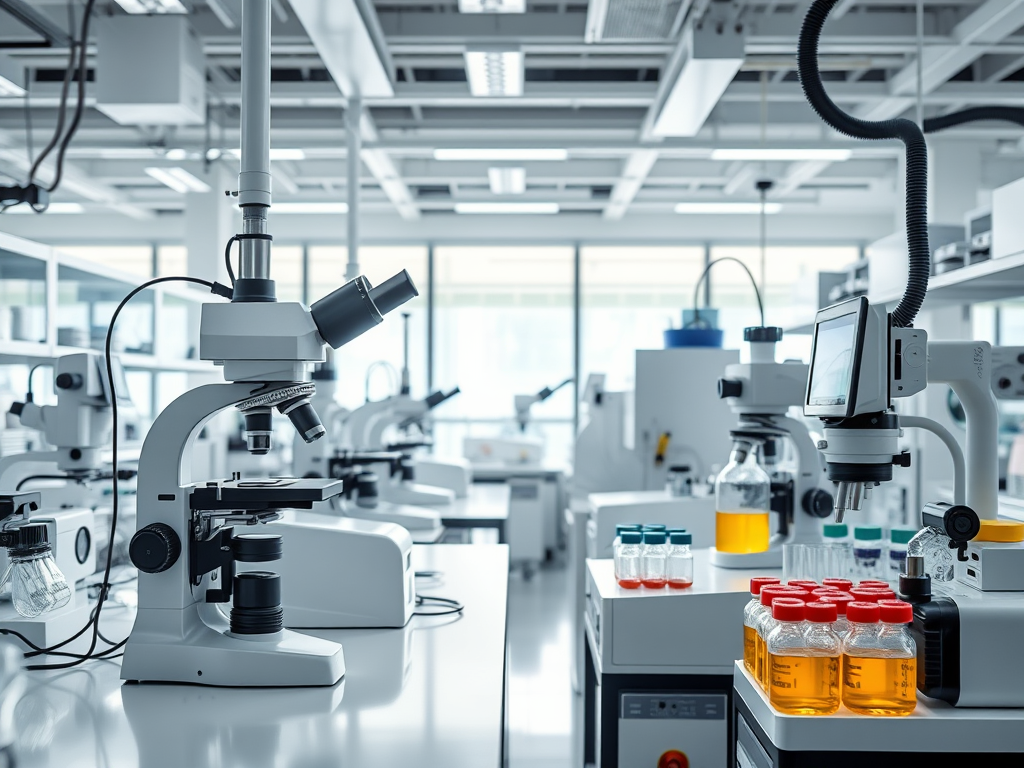
Modern labs are now being transformed by the newest equipment technologies, enhancing efficiency, precision, and automation. From machine learning analyzers to high-throughput miniaturized systems, these technologies are accelerating research in pharmaceuticals, biotechnology, and diagnostics. Some of the most impactful lab equipment advancements in the present time are enumerated below.
1. AI and Machine Learning Integration
Artificial intelligence (AI) is revolutionizing lab gear with the power to process data smarter and do more automatically. To illustrate, AI-enabled microscopes can recognize and identify pathogens or cells automatically and reduce human errors. Similarly, machine learning-enabled algorithms optimize PCR (Polymerase Chain Reaction) conditions to speed up genetic testing as well as precision.
2. High-Throughput Screening (HTS) Systems
High-throughput screening has also accelerated and become more efficient through robotically liquid-handled systems and microplate readers that handle thousands of samples within minutes. Recent HTS platforms involve the use of novel sensors and real-time data analysis, which are invaluable in drug discovery as well as genomics studies.
3. Portable and Miniaturized Devices
Lab-on-a-chip (LOC) technology and handheld diagnostic devices are becoming more widely available for testing. These compact systems, such as handheld PCR devices and smartphone-linked spectrophotometers, make rapid on-site analysis possible in remote or resource-limited settings.
4. Automated Liquid Handling Robots
Automation is reducing the level of manual labor in laboratories with advanced liquid handling robots that offer precision in pipetting and sample preparation. The systems minimize contamination risk and improve reproducibility, particularly in clinical and pharmaceutical laboratories.
5. Next-Generation Sequencing (NGS) Advances
NGS platforms are now faster and more affordable, enabling large-scale genomic research. New nanopore-based sequencers allow real-time analysis of DNA/RNA, enabling quick pathogen identification and personalized medicine.
6. 3D Bioprinting for Tissue Engineering
3D bioprinters are revolutionizing regenerative medicine through the printing of artificial tissues and organs using bioinks composed of living cells. The technology is accelerating drug testing and reducing the reliance on animal models.
7. Smart Lab Monitoring Systems
IoT-enabled lab equipment today offers real-time monitoring of environmental conditions (temperature, humidity, CO₂ levels) and equipment status. These smart systems enhance lab safety and regulatory compliance.
Conclusion
The latest technologies in laboratory equipment are making research more precise, efficient, and scalable. As AI, automation, and miniaturization continue to expand, labs themselves will become increasingly innovative and drive breakthroughs across the board. Investing in progress keeps researchers at the forefront.









Leave a Reply