

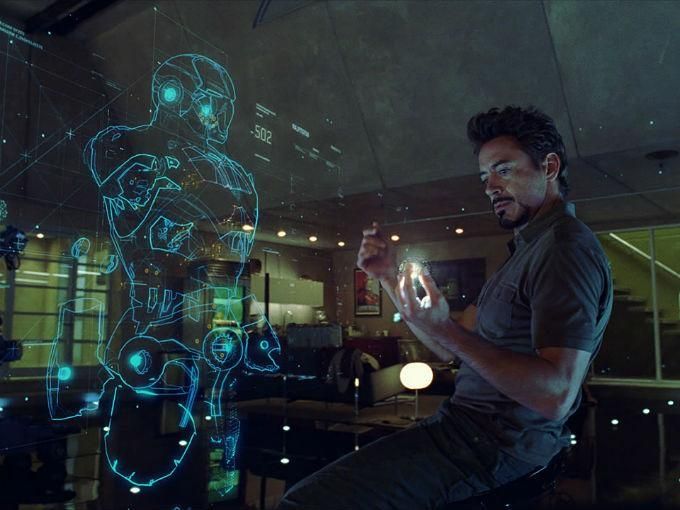
Before the Marvel Cinematic Universe exploded into a multiverse of variants, timelines, and talking raccoons, it was telling surprisingly grounded stories beneath all the action and armor. And Iron Man 3—often underrated in the sea of Marvel films—stands out as one of the first to shine a spotlight on something most superhero movies still struggle to handle: mental health.
Released in 2013 and directed by Shane Black, Iron Man 3 picks up after the chaotic events of The Avengers (2012), where Tony Stark flew a nuclear missile through a wormhole to save New York. That heroic act was world-saving on the surface, but internally, it left Tony rattled. When we meet him again, he’s building new Iron Man suits obsessively, losing sleep, and suffering from panic attacks triggered by memories of what he experienced. It’s not framed as a dramatic breakdown or a big “mental health” episode—it’s just part of his life now. That’s exactly what makes it feel real.
Instead of spelling everything out, the film uses subtle cues. Tony is constantly distracted, trying to stay busy. He cracks more jokes than usual, but they feel less like charm and more like deflection. When a kid innocently asks about the wormhole, Tony instantly spirals into a full-blown anxiety attack—rapid breathing, disorientation, and the urgent need to escape. There’s no villain here, no lasers—just his brain reacting to trauma it hasn’t processed. It’s relatable in a way that most superhero stories avoid.
Marvel didn’t label it as PTSD or launch a “mental health awareness” campaign around the movie, but that subtlety is what makes it so effective. It normalizes the idea that trauma doesn’t always look cinematic. Sometimes it looks like a man who can build anything but still can’t sleep at night.
One of the best decisions Iron Man 3 makes is not magically “curing” Tony. Yes, the ending involves dramatic explosions (this is still a Marvel movie, after all), but the emotional arc is more about Tony confronting his fears rather than running from them. He learns that he’s more than the suit—that his identity doesn’t rely on armor or gadgets. That, in itself, is a huge step toward recovery: reclaiming control over his life rather than being defined by his anxiety.
Of course, the film isn’t perfect in its portrayal. Some critics argue that Tony’s mental health struggles are brushed aside in the final act. His panic attacks stop without much explanation, and his symbolic destruction of all his suits feels like a neat, movie-ending solution. In real life, trauma doesn’t just resolve itself in one cathartic moment. But even so, Iron Man 3 deserves credit for going there at all—especially in a genre where characters usually heal through punches, not therapy.
Another standout element is how the movie avoids turning Tony into a victim or a caricature. He’s still clever, cocky, and resourceful. His anxiety doesn’t erase his brilliance—it just complicates it. That’s an important message, especially for younger viewers: struggling with mental health doesn’t make you less capable, and it doesn’t make you weak.
And then there’s the humanizing power of relationships. Pepper Potts isn’t just a love interest here—she’s his anchor. Even Harley, the kid Tony meets in Tennessee, plays a role in grounding him. These interactions remind us that support systems matter, even for billionaires in flying suits. Healing, the movie seems to say, isn’t something you go through alone.
So while Iron Man 3 might not be the flashiest Marvel film, it quietly broke new ground by acknowledging that even superheroes aren’t immune to mental health struggles. It didn’t have to make Tony sit down in a therapist’s office or deliver a monologue about trauma—it just showed him dealing with it, stumbling through it, and eventually beginning to grow past it.
In a cinematic universe built on powers, weapons, and war, Iron Man 3 gave us something far rarer: emotional honesty. And ten years later, that might be its greatest superpower.














Leave a Reply