

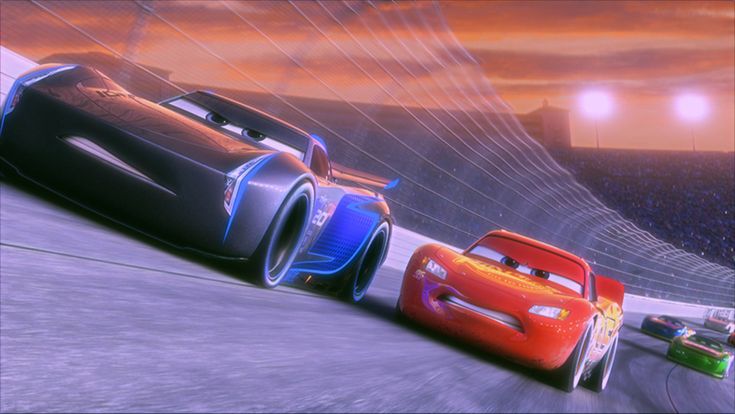
For a movie about talking vehicles, Cars 3 hits unexpectedly hard. Unlike its chaotic predecessor, Cars 3 slows down, zooms in, and asks, “What happens when the thing that made you special is no longer working?”
Lightning McQueen is no longer the shiny, brash, number-one star of racing. All of a sudden, he is being outstripped by sleek, more efficient, new competitors. No longer the prodigy, he is the washout. And Pixar, to its credit, doesn’t gloss over it. McQueen works out. He pushes his body. He clings to relevance. And he still isn’t fast. The metaphor is apparent: No matter how hard you try, time always wins.
The sense of anxiety, that aging means obsolescence, feels deeply resonant in 2025. Not because the majority of us are race cars (obviously), but because it parallels an emerging social panic about “aging out” of cultural value. On TikTok, 25-year-olds joke about “being expired.” Beauty influencers sell multi-step skin-care routines (“invest in your skin”) as preventative measures. And SPF isn’t just for the beach anymore, it has allegedly become a moral imperative. We’ve created an entire economy around resisting time.
The resemblance is eerily similar. Like Lightning McQueen is suddenly faced with a new generation of racers, many Gen Zers are faced with “fixing” other parts of them, they call it “future-proofing the face.” There is a certain desperation to his training montages that is not that different to the endless treadmill of aesthetic self-optimization seen as normal online. New serum, new drill, same existential dread.
And perhaps more troubling is how acceptable this anxiety has become. Aging is not something to accept, it is to avoid, conquer, or mask. On social media we celebrate the 40-year-old who “doesn’t look a day over 25” instead of asking why that is a goal to achieve. In Cars 3, McQueen’s value is so wrapped up in his performance, speed, and legacy, that he feels like a failure by stepping away from racing.
But the movie’s redemption arc is surprisingly mature. McQueen learns (spoilers for the dozen or so invested in the Cars extended universe) to mentor Cruz Ramirez, a young female trainer who never thought she could race. By passing the baton to another, McQueen redefines what it means to be successful, not just as an evergreen chief, but in terms of contribution, legacy, and allowing others to shine.
It’s a lesson another TikTok could benefit from learning. Aging need not be a personal failure, but can instead be a transformation, a rebranding. You aren’t worthless because you’re no longer the fastest, or the most clear skinned.
Nevertheless, Cars 3 does not quite escape the trap it critiques. Cruz, McQueen’s apprentice, is still faster than everyone. Her value still hinges on performance. And maybe McQueen does not retire so much as he rebrands, putting on his mentor’s colors and continues on. The myth of infinite usefulness is still intact. No one simply slows down.
And therein lies the irony: we act like we are anti- “anti-aging”, but we still can’t escape measuring our worth by youthful standards. We want wisdom accompanied by glass skin. We want achievement, just as long as achievement means that we trend up.
So, next time you find yourself scrolling past a “How I Stay Looking 19 at 30” reel, or thinking about spending $60 on a vitamin c serum, think of Lightning McQueen. He tried to outrun time. It didn’t work. Instead, he learned to redirect it. And maybe, that’s the ultimate glow up.















Leave a Reply