


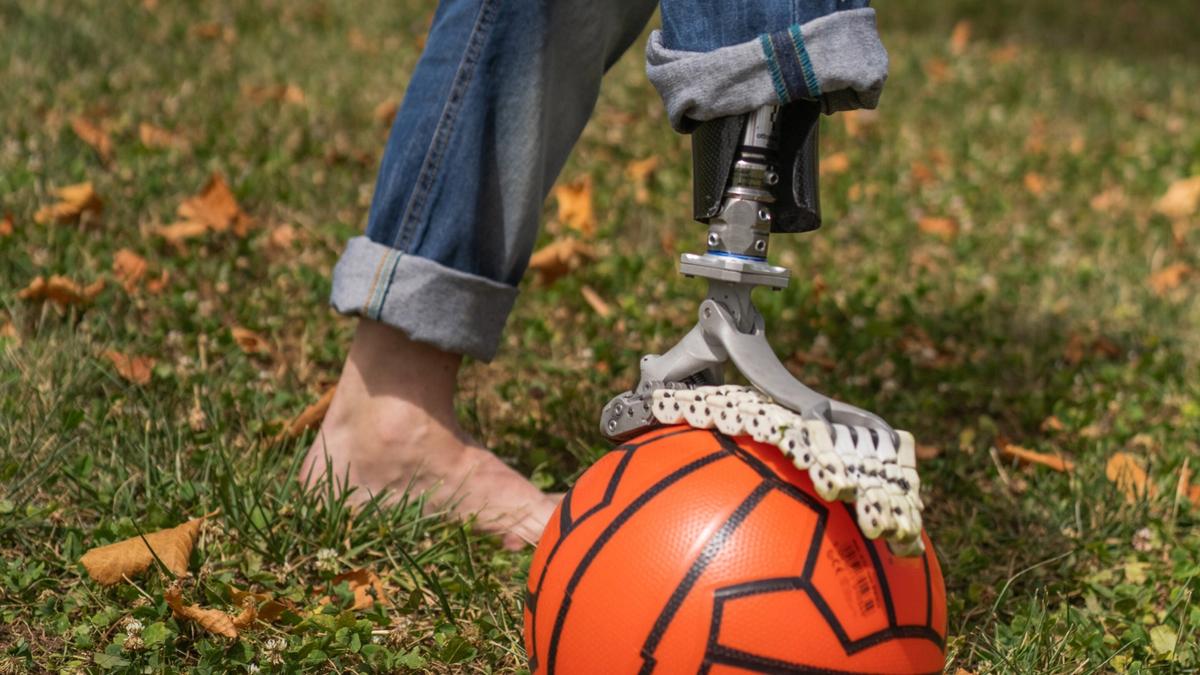
Limb loss due to trauma, disease, or surgical amputation continues to present a major challenge in modern day medicine. While prosthetics have advanced significantly, there is no current clinical approach that can fully regenerate a functional limb. However, recent work by scientists at Tufts University and Harvard University’s Wyss Institute points to a potential advancement in regenerative medicine.
A study published in the journal Science Advances demonstrates that bioelectric therapy, combined with a five drug composition and a wearable silicone bioreactor, can stimulate limb regrowth in adult frogs – which is a species that does not naturally regenerate limbs. It offers new insight into how a mammal’s regenerative processes may be activated by reprogramming the body’s natural signals, rather than by genetic engineering or stem cells transplantation.
The study involved African clawed frogs (Xenopus laevis), whose limbs were amputated. Researchers applied the BioDome wearable silicone bioreactor, a flexible cap which fits over the amputated site, holding a special gel infused with reparative drugs against the wound to create the right conditions for the body to regrow tissue. Inside the dome remains a gel containing five cautiously selected drugs, each targeting a specific biological function which aims to reduce inflammation, prevent scar formation, promote nerve and blood vessel growth, and enhance ultimate tissue regeneration. The BioDome was left in place for only 24 hours, but that short treatment initiated an 18 month regeneration process, resulting in the growth of a limb with bone, muscle, blood vessels, nerve structures. The process of bioelectricity refers to the natural gradients that exist across cell membranes, which play a role in guiding growth during embryonic development. By regulating these electrical patterns, researchers were able to present dormant developmental procedures in adult tissue. Unlike previous regenerative approaches which relied heavily on stem cell donors or extensive surgical intervention, this technique worked by naturally modifying the bioelectric state of the cells at the site of the wound.
The regrown limbs were not identical to the original structures, but they were highly functional. The frogs utilized them to swim, and further sensory tests confirmed responsiveness to touch. This suggested that even a brief non-invasive intervention may be sufficient to stimulate long term regenerative growth in vertebrates. Within days of treatment, researchers observed the activation of molecular signaling pathways, typically seen in embryos. These discoveries support the hypothesis that adult mammals may retain suppressed regenerative systems, which can be reactivated under the right conditions. The BioDome, in combination with the distinct drug composition, created a defensive and supportive microenvironment, similar to the amniotic fluid conditions of embryonic development, allowing standardized tissue regrowth.
Previous research through the same team utilizing a singular drug; progesterone, showed limited success where the resulting structure resembled a spike, lacking conventional complexity. However, in the current study, the combination of multiple regenerative reagents produced more realistic limbs, with signs of relatively transformed tissues. While the method has only been tested in amphibians so far, their team has already expressed intentions to move towards mammal models, such as rodents. If similar results are achieved in mammals, the clinical potential could be profound for real life circumstances, especially military veterans, accident survivors, and amputations aggravated by diabetes. One of the most promising aspects of this study is the minimal invasiveness of the procedure. Rather than requiring ongoing treatment through stem cell transplantation, or gene modifications, the method involves a single application of the BioDome. The long term regeneration is driven not by continuous intervention, but by activating biological processes which the body already possesses.
Ultimately, this technique serves to reshape how contemporary medicine approaches recovery. If applied to humans in the future, it may lead to a paradigm shift from prosthetic replacement to biological restoration. Further research and testing are essential before clinical trials can begin yet the foundational insight remains – regenerative potential may not be missing from adult humans but rather simply inactive. Bioelectric therapy and localized biochemical support can initiate complex limb regeneration, becoming a central component of next generation regenerative medicine.







Leave a Reply