

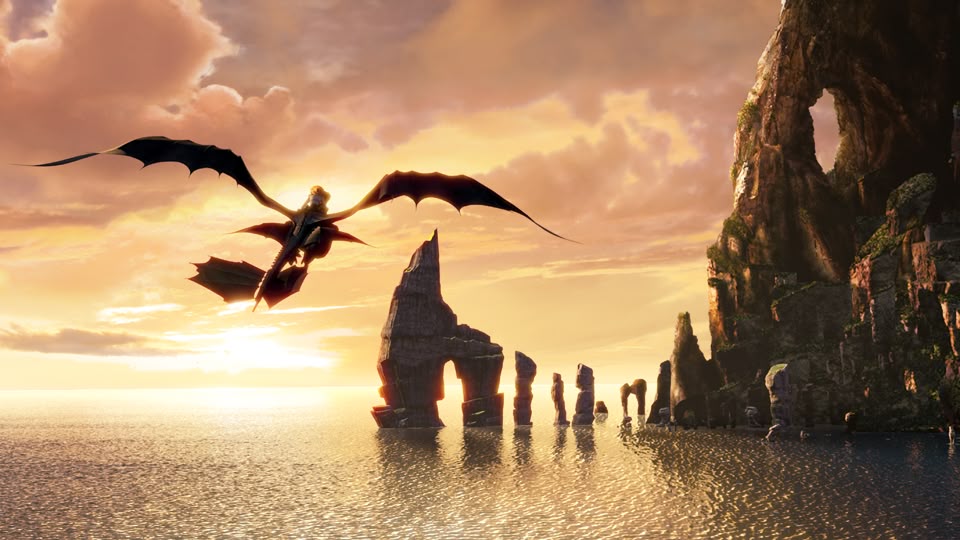
In conflict zones – from South Sudan to Ukraine to Gaza – children and adolescents lose limbs at staggering rates. Médecins Sans Frontières (Doctors Without Borders) reported in its July 2023 manifesto that one in four patients treated during the Gaza escalation were children, many amputated because of delays (sometimes due to lack of access to life-saving care), bad infrastructure, or because the bomb fell precisely where they were targeted. Unlike Hiccup, who had a blacksmith reorder his perceptions of the world, these children have hospitals that are overwhelmed, and in many instances, modern prosthetics are not even available.
In How to Train Your Dragon, Hiccup’s loss is immediate, and irreversible. He saves his people and his dragon at a huge cost to his own safety, only to wake up to discover his leg is no longer part of him. The film does not dwell on the surgery, on the pain, or even the initial sadness. Instead, we witness Hiccup wobbling towards his new normal quietly, efficiently, and with remarkable emotional discipline. Unlike Hiccup, who is able to have Gobber, an experienced warrior and amputee, fit him a high functioning metal leg that he can attach with relative ease and from which an additional prosthetic, if comfortable, can sit in his dragon saddle, the film embraces the message that disability is not a detour; it’s just part of the ride.
This clean arc is a luxury that very few child amputees ever receive. South Sudan is one of the countries with the highest rates of adult and child amputations from landmines and armed conflict, and even in urban areas posted with mines, prosthetic care is non-existent in rural areas. Many children are stuck with crutches or carried out as children until any formal medical intervention. In urban areas, a prosthetic may be shared among siblings or be outgrown before a new one can be found. Prosthetics are crude, uncomfortable, and painful, unlike Hiccup’s brilliantly rebuilt, personalized ironwork.
In Haiti, where natural disasters like the 2010 earthquake left thousands of children with traumatic injuries, the situation is similar. Medical NGOs rushed in to provide care, but long-term prosthetic maintenance—repairs, resizing, and physical therapy—has proven unsustainable. Children grow quickly, and limbs that work at age eight become unusable by age ten. There is no Gobber with a forge standing by. There is only a waiting list.
Even in wealthier countries, including the United States, limb loss does not guarantee access to support. Children with amputations face systemic inequities in this way – they have health insurance coverage that does not include adaptive sports limbs, they have to travel for hours to see a pediatric specialist because they live in a rural area, and their schools and communities do not have fundamental pieces of accessibility infrastructure. Children living in refugee communities often come to a new country after being displaced with war-related injuries and no documentation or medical history, making them invisible in health systems. There are significant delays to accessing care related to bureaucratic issues, language barriers, discrimination, and other issues and all this occurs in even the most advanced prosthetics supporting countries.
This is what makes the film both revolutionary but also frustratingly sanitized. Hiccup’s disability is not erased and not cured, at least not in a narrative morality kind of way. He did not – and could not – hide it, nor turn it into situational pity. He flies, he fights, he leads, and yet, none of the realities of disability are shown, such as skin irritation, phantom pain, or fear of falling. There is no advocacy for reasonable accommodation, no scenes of Hiccup being denied access, and there is no social stigma due to the nature of disability. For a segment of the younger viewing community, this may be the first time they encountered an amputee leading in an action story, which is important. But, the film also runs the risk of suggesting that healing is easy, recovery is linear, and support is a foregone conclusion.
In a less fictitious world, Hiccup’s prosthesis would involve delays with aspects of the supply chain. His blacksmith may have run out of parts; his friends may have rejected him, or may have even asked him unintentionally petty questions. Hiccup’s recovery is fictional; but for children who have experienced war injuries in Yemen, Sri Lanka, and the Democratic Republic of Congo, where war injuries are prevalent and prosthetic care is a scarcity, his recovery is unrecognizable.
Still, we should point out what the film does well. It shows a child surviving war without the disembodied consequences of the physical disability and still being heroic. It neither demonizes nor fetishizes limb loss. Hiccup’s journey is less about “overcoming” disability and more about coexisting with it. That is a subtle, yet powerful, development in the story. But we, as spectators, have to apply the context. Because the truth of the matter is: Hiccup flies because the world he lives in is able to catch him. Millions of children with similar injuries are grounded, not by their bodies, but by the systems that fail them.
Fantasy narratives like this do not have to account for every harrowing aspect of real life trauma. But when stories venture into real health experiences, they leave a burden behind: to remember the children who don’t get Gobber. Who don’t get second chances. Who wake up in hospitals or a crumbled house and adapt with no tools, no therapy, no announcement. Hiccup’s story is gorgeous, but leaves so much undone. This is where we come in – not to call attention to what is missing, but to fight for a world where his story feels less rare.










Leave a Reply