

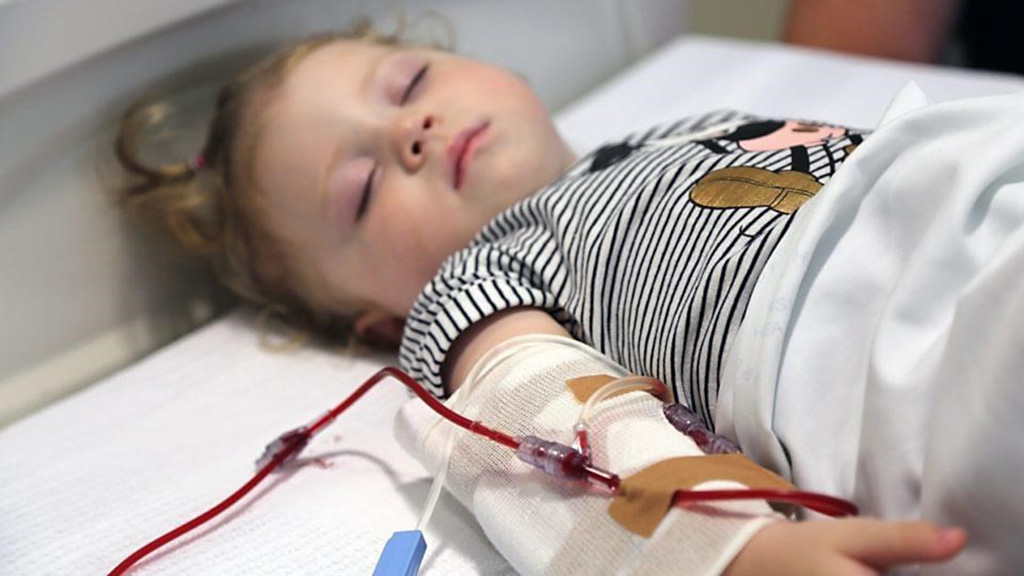
Japan’s medical research industry is poised for a revolutionary breakthrough in transfusion science, one that has never been seen before: a room-temperature stable artificial blood product that lasts for years and is compatible with any blood type. This artificial replacement was developed by a team led by Professor Hiromi Sakai of Nara Medical University. This artificial replacement is set to transform emergency room practice, disaster planning scenarios, and international blood supply chain operations.
Donated standard blood needs to be cross‑matched with a patient’s blood type and kept refrigerated for up to 42 days. It is a time-consuming procedure that is fraught with logistical difficulties, particularly under emergency or field conditions. Japan’s solution involves extracting hemoglobin from unusable donor blood and packaging it in small lipid vesicles. Hemoglobin vesicles transport oxygen similarly to natural red blood cells without ABO or Rh antigens. The result is a generic product that is compatible with any patient without cross‑matching.
Notably, this synthetic blood lasts for up to two years under ambient conditions and up to five years under refrigerated conditions. This provides a shelf life considerably longer than that of natural blood. Since it has no virus content and no immune-triggering elements, this product also minimizes further the danger of transfusion-transmitted infections.
Following the positive Phase 1 trials in 2022, which involved 12 healthy subjects receiving doses of up to 100 mL with no severe adverse reactions, the team initiated a larger study in March 2025. The currently ongoing Phase 1b study is dosing subjects with 100 mL up to 400
mL to determine safety and physiologic effects. If further data remain positive, additional studies will be conducted to assess efficacy, with a clinical rollout planned for 2030.
Japan is facing a demographic crisis characterized by declining birth rates and an aging population. With a decreasing number of donors and a rising demand for blood products, a scalable and reliable alternative to transfusion is needed sooner. Internationally, 106 of 175 nations use imported plasma products. In most low-income countries, as little as 40% of the needed transfusional demand is fulfilled. Synthetic blood with a long-term shelf life and universal acceptability might be revolutionary for future applications.
There are still some reservations. Clinical trials are necessary to demonstrate the effectiveness of hemoglobin vesicles in treating trauma and surgical conditions. Economic scale-up of production will dictate access. Approval from jurisdictions will be required. But it’s a grand promise: type-independent transfusions on demand anywhere and everywhere they’re needed.
By resolving both preservation and compatibility concerns, this artificial blood is poised to transform the practice of transfusion worldwide. If successfully developed, hospitals, ambulance services, armies, disaster sites, and refugee camps might be able to receive life-saving blood on demand. Japan may soon usher in a life-saving revolution worldwide by revising the rules for blood supply.







Leave a Reply