

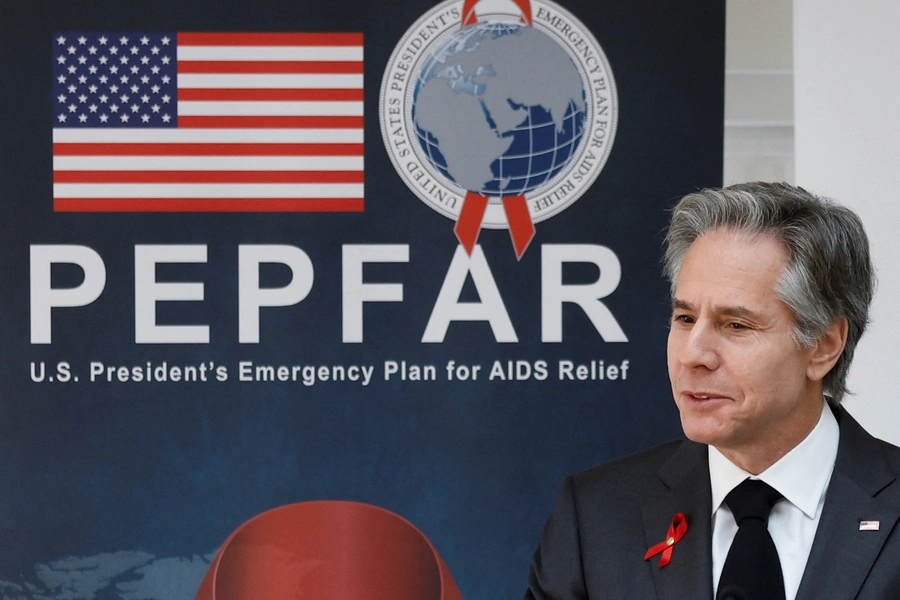
The President’s Emergency Plan for AIDS Relief, or PEPFAR for short, is a US-funded global health initiative that has been addressing the HIV and AIDS epidemic worldwide since 2003. PEPFAR provides aid in more than 50 focus countries, including Botswana, Côte d’Ivoire, and Ethiopia. According to the Kaiser Family Foundation, as of 2025, the program has saved over 26 million lives and allowed for 7.8 million children to be born without the HIV infection. Since PEPFAR was instated, its funding has been appropriated each year by Congress, and allocations have been relatively flat; however, a series of budget cuts and stop orders in 2025 by the current administration have caused critical changes. In January, President Trump issued an executive order to freeze all foreign aid programs for a 90-day period to be re-evaluated. The executive order halted PEPFAR, among other aid programs, until a limited waiver was passed to allow for certain activities within PEPFAR to take place in early February. This limited waiver did not cover protection from vertical HIV transmission from a mother to her child in utero, which can account for up to 10% of perinatal HIV transmission, according to the National HIV Curriculum. Later, in July of this year, the Senate exempted PEPFAR from the plan to cut $400 million out of government spending. This would have been a win for the program, but other budget cuts and work stop orders implemented since have halted PEPFAR activities significantly. According to PrEPWatch, an initiative of the Adult Vaccine Access Coalition, 2.5 million new PrEP users in 2024 have lost access to PREPFAR-supported PrEP services. The current administration’s advocacy for cuts to global health funding are anticipated to result in further declines in treatment and prevention access, ultimately producing poorer health outcomes worldwide. There have also been concerns, beginning in late 2024, about PEPFAR violating US abortion restrictions. It was revealed that PEPFAR funding had been used to perform abortions in Mozambique, where abortion is legal in certain circumstances. Pushback related to the U.S. government allegedly funding abortion has contributed to the re-evaluation of the program. In fact, the current administration is proposing critical transformations to PREPFAR’s activities and implementation. According to Dr. Jirair Ratevoisan, previous PEPFAR chief of staff and a global health expert at Duke University, the administration is approaching this transformation in a rushed manner, without concern for the program’s historic impact thus far. The supposed changes include a shift from US support to country ownership, characteristic of a graduation model. Additionally, despite PEPFAR’s vast impact as an initiative targeting a single disease, there have been suggestions to expand the program’s focus to other conditions, such as malaria. Regardless, if declines in allocated funds continue to decrease, healthcare workers affiliated with PEPFAR can expect to receive reduced or delayed salaries and fewer resources. Decisions being made as of now concerning PEPFAR are creating crucial damage in countries that have relied on the initiative for years. How the United States chooses to make these decisions will ultimately be the difference between progress and poorer HIV/AIDS health outcomes.
About PEPFAR and Recent Changes Made by the Current Administration








Leave a Reply