

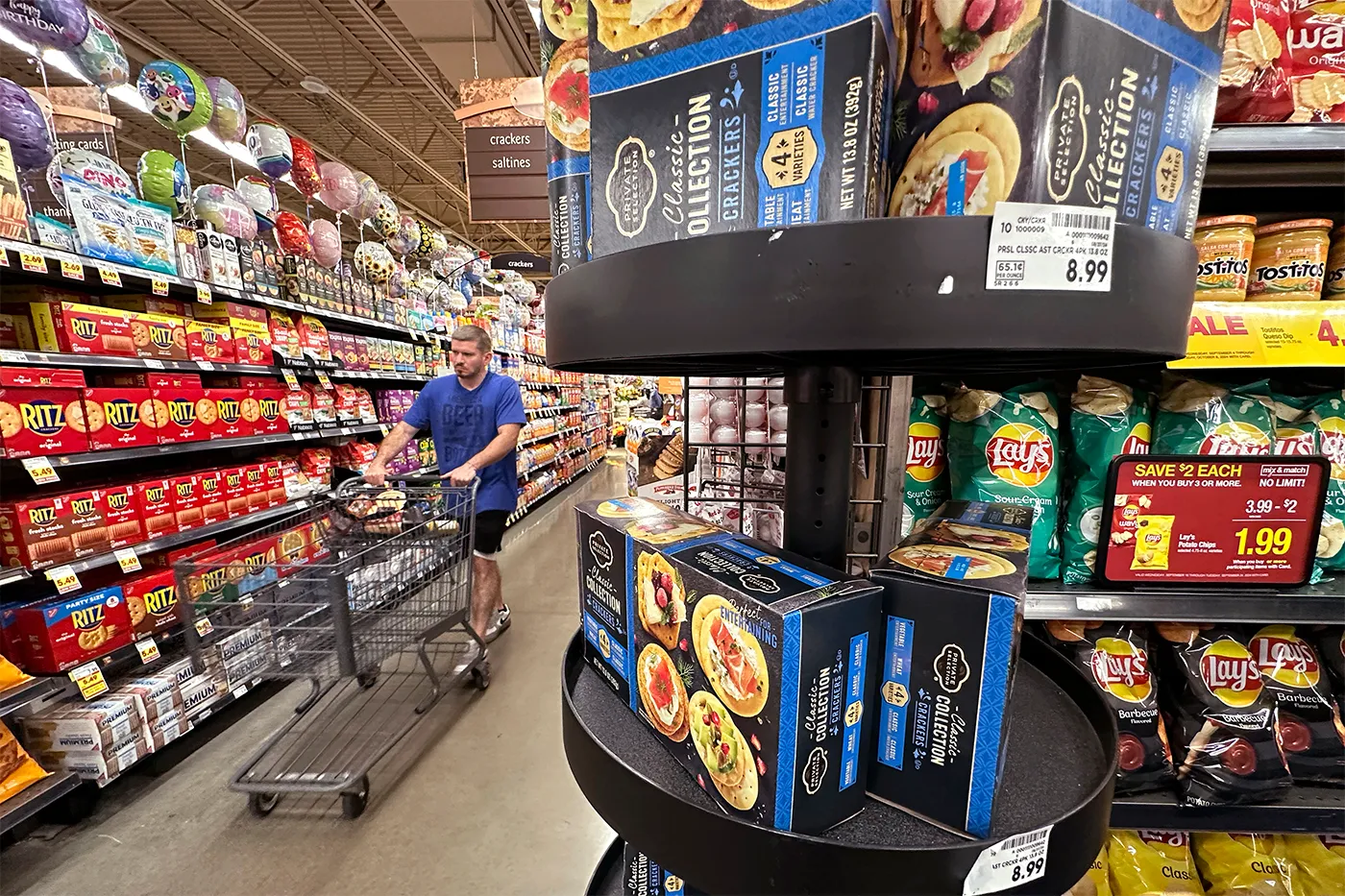
In a municipality of two chain stores, it’s a common phenomenon for one to be unequivocally worse than the other: one is often understaffed, having unstocked shelves, dirty shopping carts, an hour-old Fanta spill drying in Aisle Five— the list goes on.
However, the distribution of these stores follows a pattern. Andrea Chandrasekher, a professor and researcher at the University of California, Davis, found that these bad chain stores tend to be located in or near BIPOC-dense neighborhoods, while whiter neighborhoods tend to have higher-quality shopping experiences.
As prevalent as “good” and “bad” stores are in America, there is little definitive research to pin down any specific cause for them. Consequently, researchers are exploring known discriminatory practices— namely, derivatives of redlining policy— to see how they influence this discrepancy.
What Is Consumer Redlining, and How Could It Contribute?
In consumer redlining, chain businesses offer lackluster facilities and service to consumers in predominately BIPOC areas, while also offering higher quality alternatives around white ones. Since BIPOC neighborhoods tend to have less market competition, businesses are disincentivized from investing in their stores— if shoppers will go no matter what, what’s there to gain from paying for adequate janitors or cashiers? After years of disinvestment, the local consumer market in BIPOC neighborhoods is not only stuck with stagnant competition but also a neglected chain store.
During her sabbatical year, Dr. Chandrasekher investigated chain-store disparities between races, analyzing Yelp reviews for over 16,000 stores from over 400 chains; demographic and crime distributions; and market demand across the United States. Her original findings indeed found that chain stores in BIPOC-concentrated areas had a notably lower star average compared to that of white-concentrated areas.
There may have been explanations for this trend: if an area were particularly rampant with crime or lacked market demand, for example, a business set on profit may disinvest to avoid risk, rather than act on racialized means. But even after Dr. Chandrasekher controlled for variables like income, crime rates, market potential, and more, chain stores in BIPOC neighborhoods still averaged ratings a quarter of a star below that of chain stores in white-dominant ones. Also, BIPOC-local stores more frequently featured words like “dirty” or “disorganized” in their Yelp reviews, another indication of vastly different shopping experiences between one city area and the next.
But, as insightful as consumer redlining is, the problem of good and bad chain stores may be informed by other, more subtle developments.
Retail Redlining and the Retail-Consumer Synergy
Another potential contributor to the imbalance between chain store services is retail redlining, a phenomenon in which a chain store, rather than under-resourcing current locations, refuses to open locations in BIPOC neighborhoods at all. Supermarket redlining is a particularly notorious instance of this, where supermarkets tend to open in wealthier, white zones, while corner stores, dollar stores, liquor stores, and fast-food restaurants dominate low-income and BIPOC-dense zones in supermarkets’ absence. Whether it be supermarkets or discount stores, the complete avoidance of certain communities is the defining characteristic.
To some extent, retail redlining enables consumer redlining. The scarcity of local chain stores contributes to competition-poor BIPOC neighborhoods, and the lack of competition means that the existing stores aren’t obligated to improve their consumer experience in order to stay afloat. Unfortunately, low-quality local businesses may dissuade future chain stores from opening locations in these neighborhoods, creating a positive feedback loop of economic decline.
The Present and Future of Shopping Inequity
Shopping at the worst Walmart is more than just an unpleasant weekend experience. Some products may be harder to access, leading to a dependence on lower quality vendors like corner stores and Dollar Trees. Long queues may cut into much-needed time for other responsibilities. Knowing that markets on the wealthier side of the city are better maintained, it can even feel belittling to struggle through neglected, even unsanitary markets. And if the cycle of disinvestment persists, these conditions could intensify over decades.
These are the risks of leaving these issues unaddressed, and research is the primary way of resolving them. Studies on the roots of such disparities could be central to a number of financial and health concerns in the United States, from the lopsided distribution of wealth to the prevalence of certain chronic diseases among BIPOC populations. Whether in understanding the legacy of discriminatory policy or addressing its current manifestations, the research has glowing potential in the United States and beyond. And yes— it could explain why your nearest superstore isn’t up to par.














Leave a Reply