

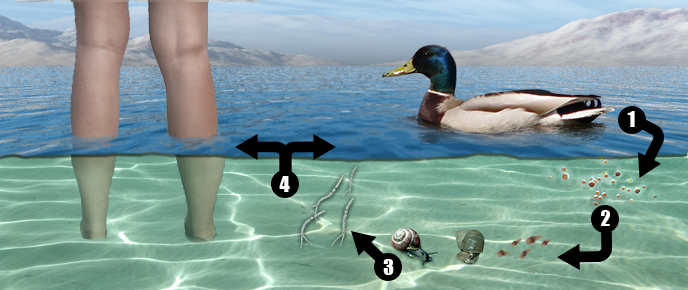
Swimmer’s itch is a super itchy rash caused by microscopic parasite larvae that burrow into the skin when you swim in polluted or infested waters. Another common name for it is cercarial dermatitis. Every summer, thousands of recreational water users are afflicted by swimmer’s itch. Cases are increasing in North America, Europe, and other regions due to nutrient runoff, warming temperatures, and the growth of snail and waterfowl habitats.
What is Swimmer’s Itch?
Swimmer’s itch is an allergic reaction to the cercariae, or, in other words, larvae, of schistosome parasites. They usually alternate between intermediate hosts, such as aquatic snails, and definitive hosts, such as birds or mammals, including humans. When released into the water, cercariae usually search for their suitable hosts. But if they come into contact with human skin, they pierce it, die fast, and produce a severe, itchy trigger. Despite being self-limiting, the reaction can last for up to two weeks and can lead to a secondary bacterial infection if it is scratched excessively.
Where is t Found?
This disease is often found in warm lakes and ponds with fresh water, where a high density of snails thrive. However, cases have also been reported in brackish and coastal waters because some schistosome species can survive even in low salinity. This condition has a truly global presence, occurring on every continent except Antarctica, and goes by many local names such as “rice farmer dermatitis” in Japan, “Wasserhibbel” in Germany, and “puces de canard” in Switzerland. In July 2000, a study at Michigan’s Douglas Lake found that 6.8 cases of swimmer’s itch were reported for every 100 days of water exposure, indicating that outbreaks typically peak in the summer.
How Does It Affect the body?
Swimmer’s itch has specific cycles:
- Immediate sensations (Several hours after exposure):
After the larvae has just penetrated the skin, the person experiences a tingling, burning, or itching sensation. Little red macules or papules start to form one to twelve hours later.
- Peak rash (10–15 Hours after exposure):
Ten to fifteen hours after exiting the water, intense scratching can introduce bacteria that cause secondary infections, and extremely itchy papules. On top of that, tiny blisters appear.
- Sensitization:
Body’s allergic reaction becomes more severe with each subsequent exposure to contaminated waters, resulting in an earlier and more severe onset of each new episode.
Who is at Risk?
Water blues affect each person who spends time there. Anyone who swims or wades in warm water with plants is most at risk. Especially when children play and splash near the shore! Swimmer’s itch is also more common in people who live near lakes or rivers and spend a lot of time in the water. It doesn’t target tourists or relaxing people only. Fishers, wildlife researchers, or people who work at waterfowl care are even more likely to come into contact with the parasites. Lastly, you are most likely to get swimmer’s itch if you swim in places like the Great Lakes, or coastal marshes in Europe where these parasites are known to have a snail-and-bird life cycle.
How Does the Environment Influence the Distribution of the Disease?
Swimmer’s itch shows up wherever three things come together: the right snails, the right water birds, and people swimming in bad places. In the US, the biggest hotspots are located around the Great Lakes. The reasons for this dominance are cold, clear lakes that have sandy or muddy shallows filled with aquatic plants. Those are the places where snails live. Migratory ducks and geese rest and feed in these waters, and the snails release parasite larvae into the water each summer. However, the itch isn’t just in the North. Swimmer’s itch may develop anywhere warm water meets waterfowl and snails. Birds from the Mississippi flyway have been attracted to newly constructed reservoirs on the Tennessee, bringing the parasites with them. Snails and visiting birds coexist in local ponds or artificial lakes, even in states like Florida and Texas.
Local water conditions also matter. Snails usually prefer calm beaches where waves don’t wash them away. These beaches have lots of vegetation, and slightly alkaline water. Snails are generally kept in small numbers by strong winds and rough water. Temperature and water depth also matter. Warmer waters hasten the life cycle of parasites. The true map of affected areas is likely even larger than scientists realize because swimmer’s itch is frequently unreported due to rare causes of serious illness. In fact, it does not spread from person to person.
In general, swimmers everywhere must be mindful, rinse off, and dry quickly after any dip in calm, plant-filled waters because even minor changes in snail habitats, bird migration patterns, or water management can suddenly create new trouble spots.
Treatment and Prevention
It’s always a good idea to heed any local warnings or signs before entering the water. Even in the absence of any posted warnings, try to stay away from swimming in places with dense vegetation or where snails might be present, especially in calm, shallow water.
Rinse the body as quickly as possible with clean water after swimming. Within 30 minutes, thoroughly rub your skin with a towel to remove any remaining parasites. Waterproof sunscreens tend to contribute to the formation of a special barrier, providing a minimal level of protection against parasites.
Over-the-counter creams such as mild steroid creams or calamine lotion can help make itching less painful in case still getting a rash. Antihistamine drugs can also lessen pain. You can also use cool compresses or a colloidal oatmeal bath to soothe the skin. Avoid scratching too much as this can lead to infection and skin breakage!
Don’t Forget About Medical Help!
Most cases go away on their own, but it is highly recommended to see a doctor if the rash becomes red, swollen, warm, or starts to ooze pus. Additionally, if the itching persists for more than two weeks or if a fever develops, the person should get medical attention.











Leave a Reply