

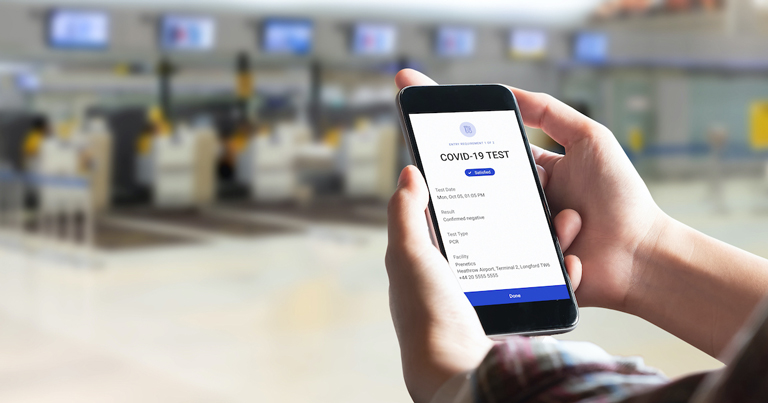
Over five years ago with the COVID-19 pandemic, there was an intense growth in the field of digital health technologies, specifically digital health passports and electronic documents that could be used to confirm the vaccination or testing status of a person. Although they helped control the cross-border flow of people and prevent the spread of the virus, their prolonged use after the pandemic has brought up important questions of surveillance, privacy, and the right of an individual. The big question is: are we losing too much individual freedom in our attempts to safeguard the health of the population?
This emergency measure that was initially taken as a temporary option has started cementing itself as a new normalized system in certain countries. Governments and corporations are also focusing on investing in digital technologies that monitors health data, mobility, and behavior. There are obvious advantages of these systems: they simplify contact tracing, make international travel a bit smoother, and set precautions in case of an outbreak. However, there arises a risk of data breaches, This is a chief concern within countries in which legal safeguards on the data privacy may be inadequate.
However, the effects of these technologies are not felt equally around the world. Digital divides have created challenges in the use of these tools as far as the population of many low and middle-income countries are concerned. While in higher income countries, there is uncertainty regarding the duration of retaining personal data, as well as who has control over it. It is possible that these systems may not be as transparent as they seem to portray to be.
Human rights activists have decided to stand and speak out for more privacy and more control over personal information. They’ve alluded to possible political control or discrimination if these technologies are used out of control. This, in turn, has caused more fear to grow that someday such systems will be used not only to track health conditions but also to invade on more rights.
The world is at a crossroad, but there are efforts being made. The World Health Organization and the UN Human Rights Council have urged robust ethical standards, prioritizing data transparency, time-limited consent, and safeguards against misuse. It is not a call to stop innovation but to help protect private and personal information.
These technologies can be useful in making international travel smoother and monitoring health data, but nevertheless, this cannot be at the expense of privacy rights. If we want to live in the world, where these technologies become a standard, they have to benefit the population without jeopardizing individual rights.
Image Credit: Future Travel Experience










Leave a Reply