

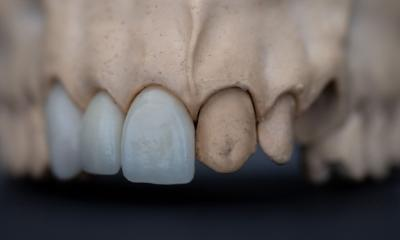
Tooth loss affects tens of millions worldwide, leaving many reliant on artificial replacements such as dentures and implants. According to the World Health Organization, nearly 7 percent of adults over 20 years have lost all their teeth, and that figure rises to 23 percent for those over 60 years old. Traditional dental prosthetics can restore basic function but come with limitations: poor long-term fit, wear over time, and risk of implant failure. Emerging biological therapies aim to change this paradigm by regenerating natural teeth, potentially offering a permanent, fully integrated solution.
In humans, there is one permanent adult set of teeth and a “baby” set of teeth, but scientists believe that we have dormant cells of the tooth buds that can grow a third set of teeth. A molecule, USAG-1, inhibits primary development stimulation pathways (BMP and Wnt) that stimulate tooth germ development, holding the buds back during early development.
In mice that had no USAG-1 function, a single-dose neutralizing antibody reactivated tooth buds, as well as developed normal teeth. Following that achievement, Osaka researchers, directed by Dr. Katsu Takahashi, have made considerable progress by initiating a Phase 1 trial in Japan. Two- to six-year-old children with anodontia have, since July 2025, been treated with the antibody treatment, which has shed light on the time to establishment of safety, as well as on early indication of new tooth development. If the human results are consistent with the mouse findings, follow-up phase studies will test for new tooth occlusion, root stability, and masticatory function. Scientists aim to bring the anti-USAG-1 therapy to full-scale application by 2030, offering a biological alternative to mechanical dentures.
Others are equally keen to grow teeth naturally. Scientists at committed research centers at King’s College London have developed laboratory-grown tooth organoids that implant on jawbone tissue and develop into enamel-producing cells. Experimental bioengineered scaffolds with dental stem cells are used to build entire teeth in situ, as researchers investigate enamel-producing proteins to construct lost enamel onto permanent teeth directly. Such extensive cooperation at various research facilities testifies to the intricacy of the process.
There remain some salient questions, particularly of long-term safety. BMP and Wnt pathway regulation also pose potential risks, as they affect cell growth systemically throughout the rest of the body. Manufacture cost as well as optimal mode of delivery, either by injection or a distinctive dental procedure, must similarly be resolved prior to such therapy becoming routine practice.
The transition of false tooth replacement to actual biological recouping of teeth presents a tremendous leap for dental science. Research studies and clinical trials of the coming years will decide if it ever becomes as common as filling a tooth cavity to restore a new tooth.








Leave a Reply