

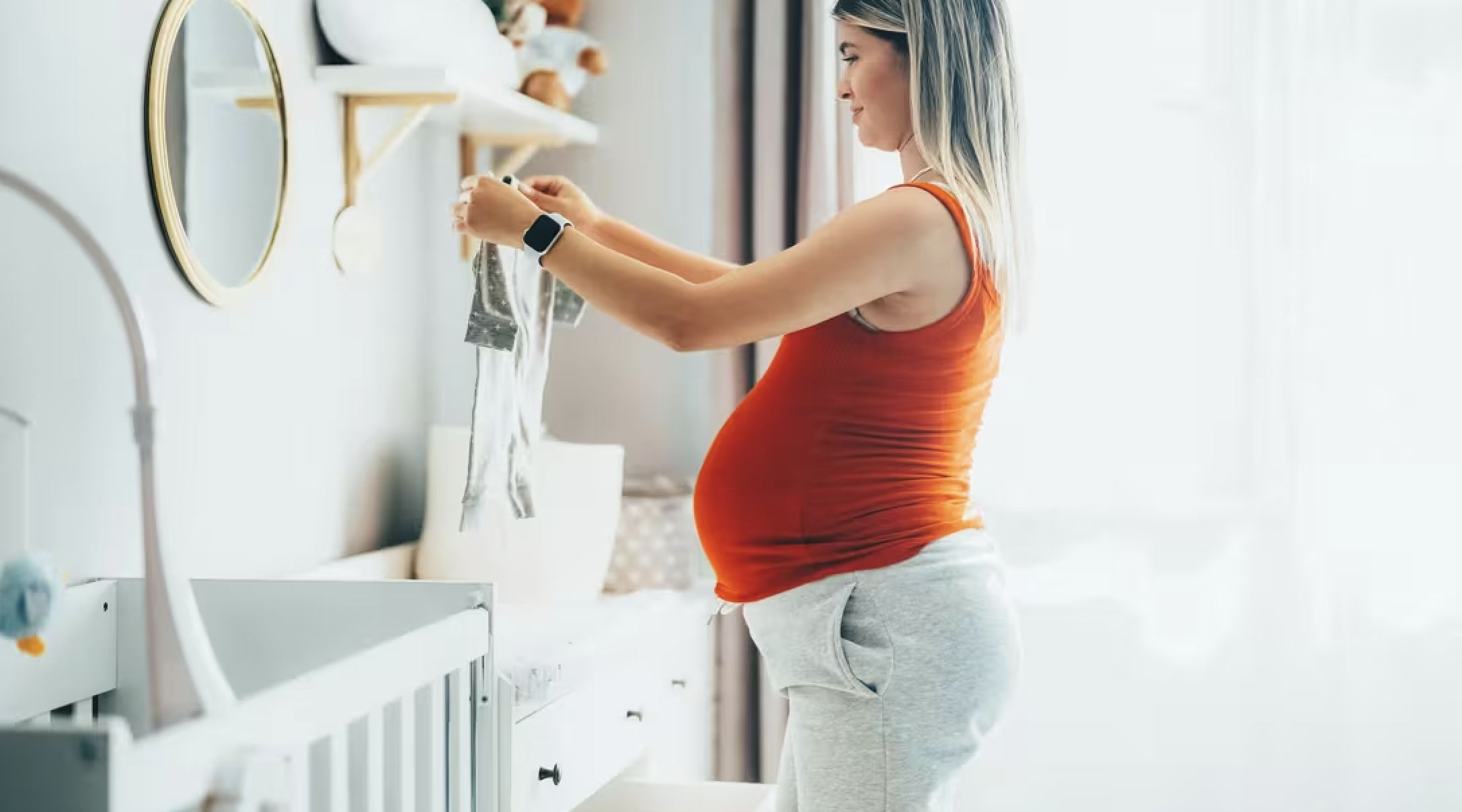
Nesting describes the strong urge to get the home ready for the baby’s arrival. Pregnancy nesting is a common experience for many expecting parents. This usually shows up in the last trimester, but it can happen earlier too. This can include cleaning, organizing, decorating the nursery, or even starting home improvement projects. While many people joke about nesting, it actually plays a pretty important role in perinatal health. It covers the physical, emotional, and mental well being of both mother and baby during pregnancy and soon after birth.
What Drives the Nesting Instinct?
Biologically, it’s often tied to hormonal changes. The increase in oxytocin, combined with newfound bursts of energy, is nature’s way of urging you to create a safe, inviting space for your newborn. According to the American College of Obstetricians and Gynecologists (ACOG), nesting behaviors tend to increase as labor approaches, particularly in the final few weeks of pregnancy . This behavior may have developed to help ensure a secure environment for the newborn. Physically, nesting can encourage light activity and movement, which is very helpful during pregnancy. However, pregnant women should not wear themselves out or engage in unsafe activities such as heavy lifting or using harsh cleaning chemicals. Nesting also has emotional benefits; it helps the pregnant person feel more in control and ready, especially as the due date gets closer.
Emotional and Practical Benefits
Nesting not only has some solid benefits for the mother, but also for the baby. Nesting creates a safer environment for the newborn. When parents prepare the home in advance, they are more likely to notice and fix anything that could cause harm to the newborn. From a healthcare perspective, nesting can even encourage important conversations about infant care, safety, and postpartum planning. It can encourage parents to communicate more with their healthcare providers.
In the end, nesting is about more than just cleaning or decorating. It is a natural instinct that helps parents feel ready during this major change in their lives. It supports physical activity and emotional well being. What might look like simple organizing is actually an important way of preparing both body and mind for the arrival of this new life. Nesting is one of the many ways the body and mind work together to prepare for parenthood.
















Leave a Reply