


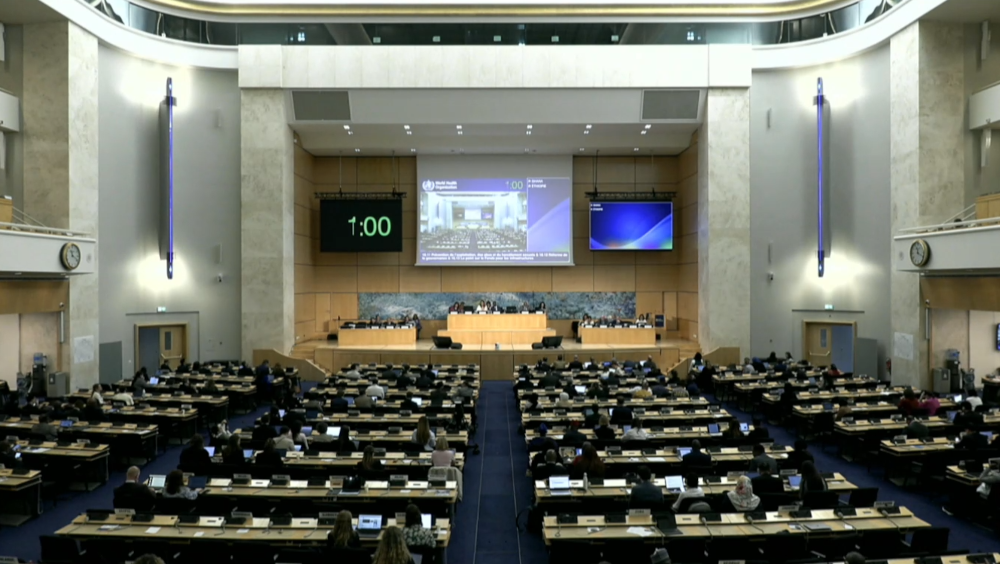
On September 25 2025, US Health and Human Services Secretary Robert F. Kennedy Jr. addressed a United Nations assembly and disrupted the pathway of a UN political declaration to address noncommunicable diseases. This declaration is the result of years of work, including over five months of formal negotiations with various parties, in order to create a roadmap for addressing and preventing diseases such as diabetes, cancer, and cardiovascular diseases.
The new nonbinding political declaration on noncommunicable diseases, or NCDs, which is largely being supported by many countries currently, has targets that need to be achieved by 2030 to focus on the 43 million people that die globally every year from noncommunicable diseases (of that number, 18 million die before 70 years old, and most happen in low and middle-income nations). These goals include reducing the number of tobacco users by 150 million, enabling 150 million people to control their hypertension, and increasing the number of people who have access to mental healthcare. It also emphasizes promoting healthy diets and increasing access to affordable fruits and vegetables. Although RFK Jr. started his speech by explaining how much he cares about addressing these issues, he then proceeded to object to the declaration. He also added that the Trump administration does not want to promote abortion or any “radical gender ideology,” even though both of those are nowhere enshrined in the declaration. The declaration has received widespread support to move it forward; however, as the World Health Organization stated, “world leaders have expressed overwhelming support for the text.”
The rejection of the new declaration by RFK Jr. is part of a bigger picture that involves the Trump administration’s criticism of numerous UN agencies, specifically the WHO. Previously, almost as soon as Trump was inaugurated, he started the process of removing the US from the WHO, and some US health officials were no longer able to communicate with WHO workers and representatives. RFK Jr. himself has been known for taking more active roles in global health decisions, such as controversially cutting funding for Gavi, the Vaccine Alliance, based on debatable studies. However, the US rejection of the document is not the beginning of the end for it, as the UN General Assembly President said that the document will be considered for final approval by member states of the General Assembly this month, in October, where it is expected to gain a lot of support.









Leave a Reply