

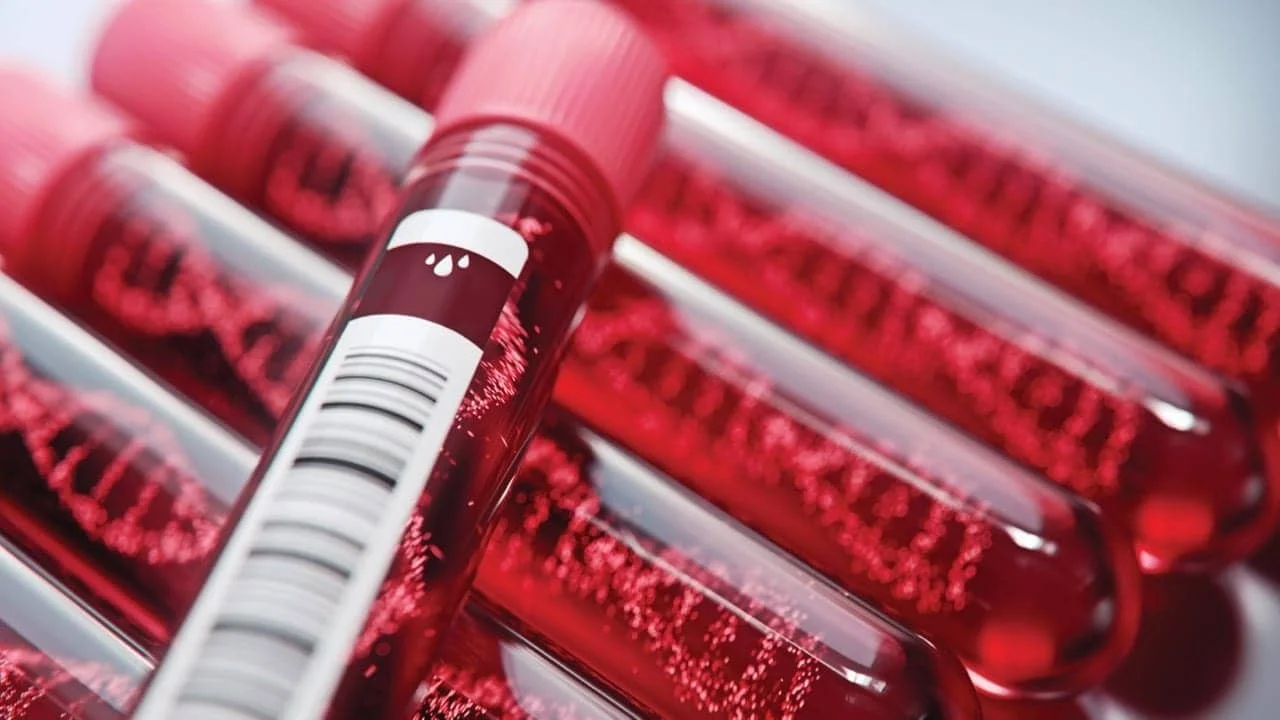
Fighting cancer has frequently felt like a race we start too late. We often detect cancers identified at states where they have already spread, enabling treatment complexities and less certainty of the eventual outcome. But what if a blood test, quick, simple, and minimally invasive, could detect cancer before symptoms ever appeared? That’s the vision of liquid biopsy, with the promise of transforming the way we think about early detection.
A liquid biopsy works to look for small traces of cancer in blood. Tumors expel DNA, RNA, and even whole cells into the bloodstream, and each of these can leave an imprint that researchers refer to as circulating tumor DNA (ctDNA). These fragments can all now be detected and studied by utilizing advanced sequencing technologies. These fragments not only let us know if cancer exists, but even in this can identify the tumor type and any genetic mutations guiding treatment. It’s like finding cancer as a seed before it sprouts.
Some studies have recently been the first to show such real-world potential. In 2020, a landmark study published in Annals of Oncology reported a multi-cancer early detection (MCED) test, which was able to detect more than 50 different cancer types from a blood draw, with a low false positive rate. Now in the U.S. and U.K., there are large trials occurring to evaluate these blood-based screenings in thousands of people, investigating how they work in the real world and everyday healthcare contexts.
The stakes are enormous.
For patients, it means less invasive screening as compared to traditional biopsies or imaging, and possibly catching cancer at a time when treatment has the best chance to yield a benefit. For clinics, it enables them to start to adjust therapies at the first appointment, to know what mutations are fueling a tumor before surgery or chemotherapy even begins. For families, it means hope with the chance to screen for cancers with a simple blood draw during a yearly checkup, as opposed to being diagnosed after months of no explanation for unexpected symptoms.
But there are challenges ahead. Isolating cancer in a blood sample is like looking for a needle in a haystack, especially when the tumor is a tiny one. Questions of who pays and who has access, and how to integrate into public health systems, seem rather large. And while false positives are very low risk, there is still a small risk that can create fear. Researchers caution that liquid biopsies certainly don’t replace standard technologies like mammograms or colonoscopies, but are, rather, a very promising enhancement that may someday be able to discover what other tests may have missed.
Yet, progress is undeniable at any rate. Trials running in 2025 are expected to help shed light on how liquid biopsies could expand to standard medical practice. If the goals are met, the simple act of drawing a blood sample could become one of the most powerful techniques we have to interpret means of fighting cancer. In the end, liquid biopsies are not just using effective technology. They rewrite the story of cancer that far too many families have heard, about a diagnosis that was a surprise, found too late. Envision a future where a drop of blood informs not just knowledge but time, time to treat, time to recover, time to believe. That is the quietly powerful interpretation in every test tube held.








Leave a Reply