

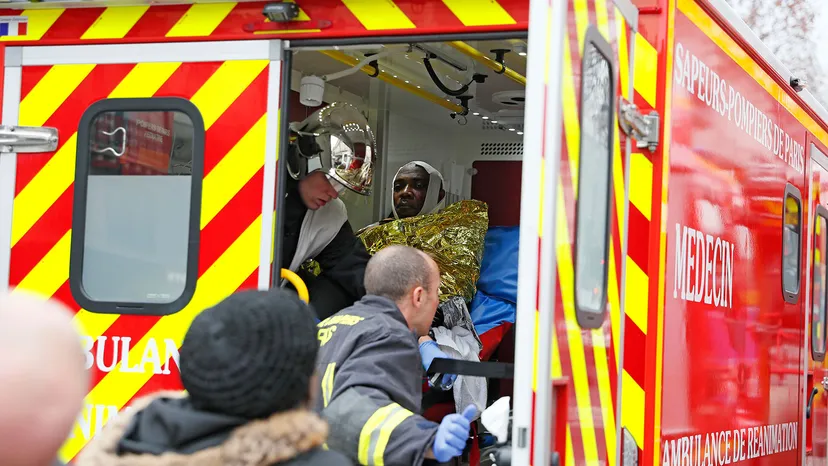
When calling 911, a quick and effective response is expected. Often, the difference between life and death comes down to the speed of the EMS, or Emergency Medical Service, responding to the crisis. However, for those living in “ambulance deserts,” these timely services are a rarity. As defined by the Maine Rural Health Research Center, an ambulance desert is “a populated census block with its geographic center outside of a 25-minute ambulance service area.”
A 2023 study by the Maine Rural Health Research Center found that roughly 4.5 million people lived in an ambulance desert. Additionally, the study found that rural counties were more likely than urban counties to have ambulance deserts. Many rural areas in America rely on emergency services staffed by unpaid volunteers within the community, many of which are older volunteers in their 60s or 70s. Recently, the number of volunteers for these vital operations has been declining steadily, stretching these already understaffed services thin. This, coupled with inadequate funding and untrained workers, results in areas that experience huge disparities in terms of ambulance services. Liberty County in north Florida contains only one ambulance with two full-time paramedics covering almost 2,000 square miles. Often, the emergency can only be stabilized until an ambulance from the nearest service, thirty minutes away, can arrive and drive them to the hospital.
The correlation between rural areas and poverty only adds to the imbalance of treatment in ambulance deserts, preventing effective community funding for volunteer emergency programs and stranding those who cannot afford housing closer to an emergency center. Specifically, the Appalachian region, which has some of the highest poverty rates in the United States, also contains one of the largest numbers of people living in ambulance deserts.
These areas do not just suffer from unreliable emergency services; the overall rates of mortality and health issues are higher there than in urban or suburban counties. The Deputy Director of the Maine Rural Health Research Center states “They (rural citizens) not only have to travel further than people living in urban communities to see their health care providers, they are more likely to be uninsured, they tend to pay more out of pocket for health care services, and they are less likely to have jobs with paid time off.” People in rural areas are also more likely to opt out of prescribed medication in order to save money. This causes more emergencies in these isolated places, where, due to the lack of resources, help often does not arrive in time.
The issue stems from a lack of organization and government intervention, since ambulance services are not provided by the government as they are in other countries. Also, many states do not delegate EMS as essential services and therefore do not designate enough funds towards the system, leaving service workers and rural citizens feeling disregarded and forgotten as they are left to fend for themselves in life-threatening situations.














Leave a Reply