

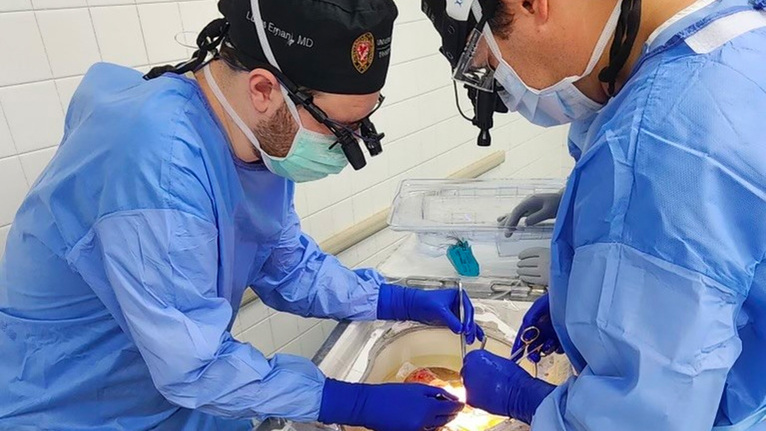
Built on the idea of fair and unbiased healthcare, the organ transport system operates using generated lists based on patient profiles. When an organ becomes available for medical use, a list is made with people who match the blood type of the donor and is ranked based on severity of their illness, time spent waiting, and location. After this, offers are sent out to doctors of patients starting from the top of the list where doctors can either reject or accept the donated organ for their patients. If the doctor believes the organ to not be fit for their patient, they will decline and the offer will be sent out to the next on the list and so on and so forth. However, in dire situations there is a procedure called an “open offer” that is often used when the organ is at risk of being unusable due to time constraints. In these cases, a hospital will be called and simply given the organ to use on any patients regardless of the generated list. This procedure is only meant to be used as a last resort before an organ can no longer function.
However, this system has become a norm in recent years. When before open offers were only used in about 2% of cases, they are now used by organizations at least 10% of the time with some utilizing it upwards of 30% of the time. Patients who are in critical conditions have been passed up due to open offers as a potential organ was used instead by a patient who was stable.
The cause of this sudden shift is easily identifiable however. Nonprofit procurement organizations in charge of organ donations were put under pressure by the Trump administration to lower the rate of discarded organs within facilities. In order to quickly and cheaply mend the issue, they turned to the method of the open offer. Yet, this method fails to solve the problem of discarded organs as rates continue to rise as the open offer is abused. Additionally, open offers can be inherently biased as organizations often choose preferred hospitals. Because of this, organs are more often given to white and asian patients and patients with higher education. For example, white people make up 39% of the transplant list and last year received 46% of donations but when lists are ignored the number grows to 50%.
Because of politics and biases, patients in desperate need or viable organs are being passed up or disregarded completely. For a system built to be fair, the organ transplant system continues to fail those it exists to serve. Now, the waiting list is longer than ever as open offers become the new recipient of most organs. No matter how much doctors and patients complain, their pleas fall on deaf ears as more organs are rushed past those in need.














Leave a Reply