

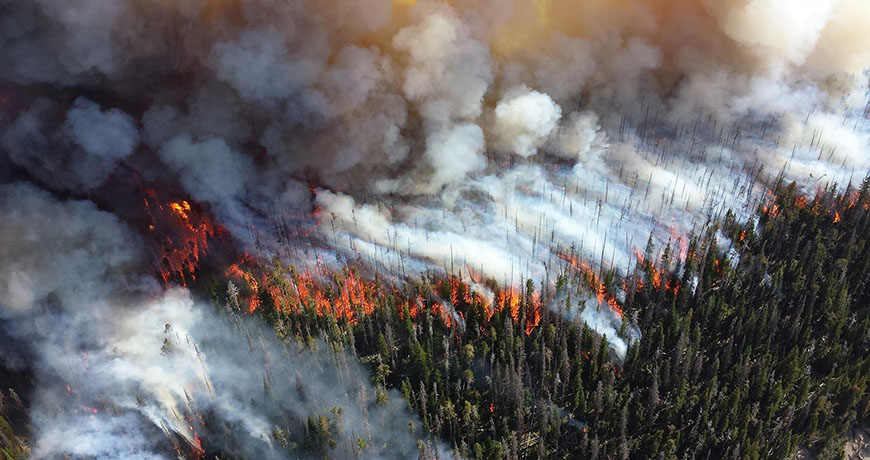
Air pollution from forest fires has become a pressing and immediate health issue as a result of climate change. Millions of people worldwide are forced to endure weeks or even months of poor air quality due to fires. Wildfire smoke can be carried by the wind over a considerable distance, affecting areas which are far away from the fire.
The main health risk from smoke generated by forest fires is due to tiny particulate matter, called PM2.5. These particles are tiny enough to be inhaled deep into the lungs and can then enter the bloodstream. Prolonged exposure to this pollutant may cause a range of health problems including throat and lung irritation, difficulty breathing and coughing. Furthermore, repeated exposure to the pollutant can cause additional health problems such as heart attacks and strokes. In periods of heavy smoke, there are more hospital visits by people with asthma, COPD and heart conditions.
Populations with particular vulnerabilities exist. Due to their higher metabolic rate, children breathe in more air in proportion to their body weight than adults do. Moreover, children’s lungs are still developing and thus more susceptible to the harmful effects of smoke. People suffering from heart or lung conditions are at a greater risk. This is especially true for older people. Their condition may worsen significantly. People working outdoors, such as farm workers, construction workers and delivery personnel, are unable to escape smoke from wildfires and so have health concerns.
A build-up of smoke in the air from a wildfire can damage people’s mental health. The prolonged presence of smoke can be associated with evacuations and a significant loss of property, causing people emotional distress and anxiety. This can also trigger stress-related depression. Even though they may be quite far from the fires, individuals can experience a high degree of anxiety because of being confined to their homes, schools closing and disrupted routines. Long-term exposure to wildfires can have a considerable negative effect on people’s mental health.
There is a growing strain on health care systems due to smoke from wildfires. With a rapid increase in people suffering from breathing and heart problems, hospitals will have to prepare for such a surge in patients. Meanwhile, health departments are also required to inform people of the potential risks to their health from the air quality and protective measures they can take. Low-income communities have less access to filtered air, better masks and air cleaners.
People need to take precautions when wildfire smoke affects them, but also longer-term answers are needed to limit the health impacts of forest fires. Various short-term measures could be taken, such as improving the monitoring of air quality, informing the public about their health and providing protection for workers who have to be outdoors. In the long term, the way in which land is managed, the design of fire resilient buildings and a general effort to decrease the conditions that can lead to wildfires are crucial.
Climate change has the potential to cause an increase in forest fires, making a smoke reduction strategy an important part of climate adaptation plans. If left unchecked, human health risks from smoke exposure will keep increasing, and they are likely to disproportionately affect some groups.













Leave a Reply